
The Yellowstone's Hidden Life, Up Close
October 2026
Article and photos by Jessica Plance
From Big Timber to the North Dakota border, the Yellowstone River is a constantly changing system. Its water moves through mountain communities, agricultural lands and growing population centers, carrying with it an intricate community of microorganisms that can tell researchers a surprising amount about the river's health.
At Montana State University Billings, Michael Cuddy, an assistant professor of physical chemistry, leads a team of undergraduate researchers studying those microscopic communities, part of a project funded through the National Institutes of Health's INBRE program.
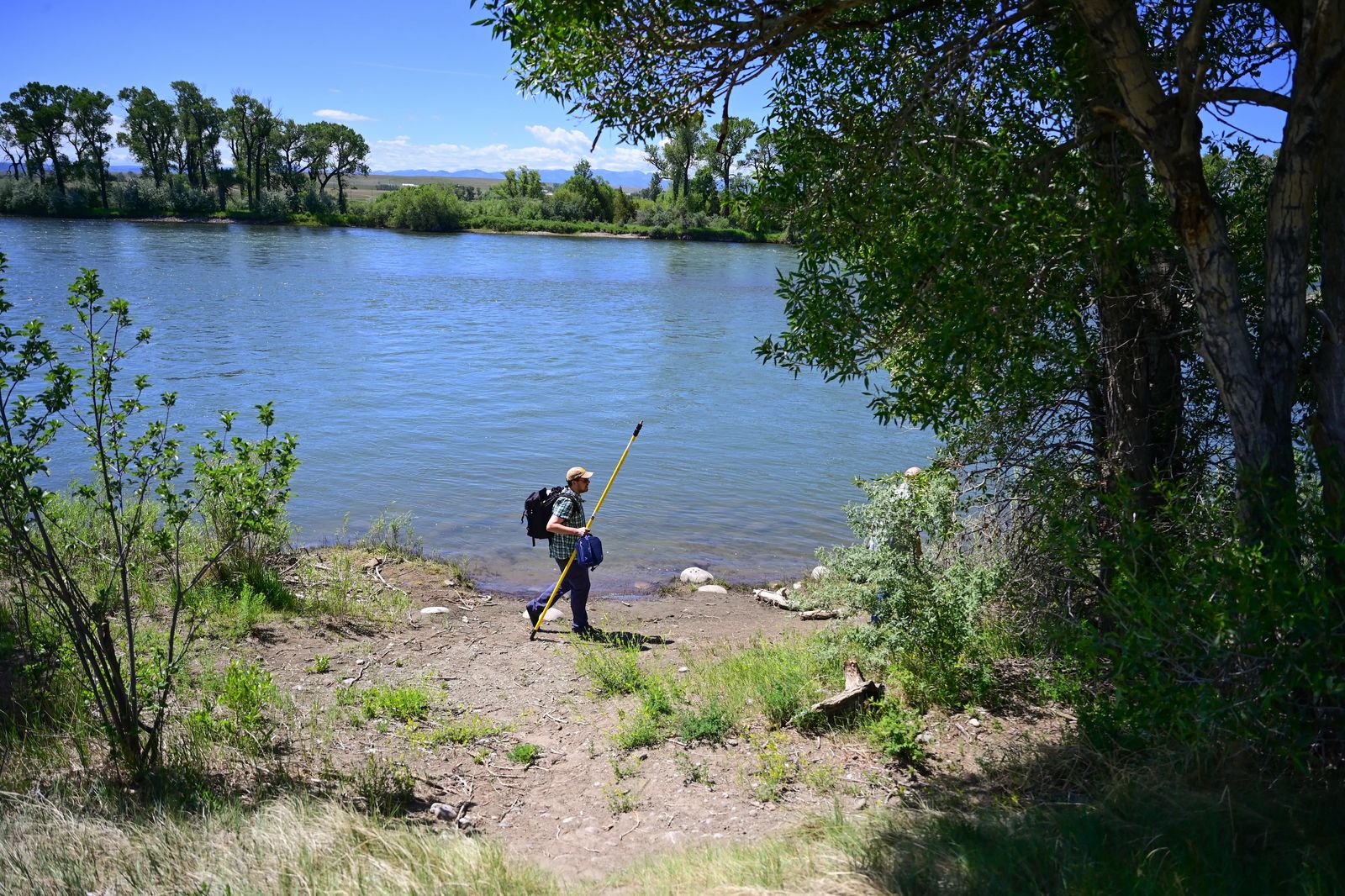
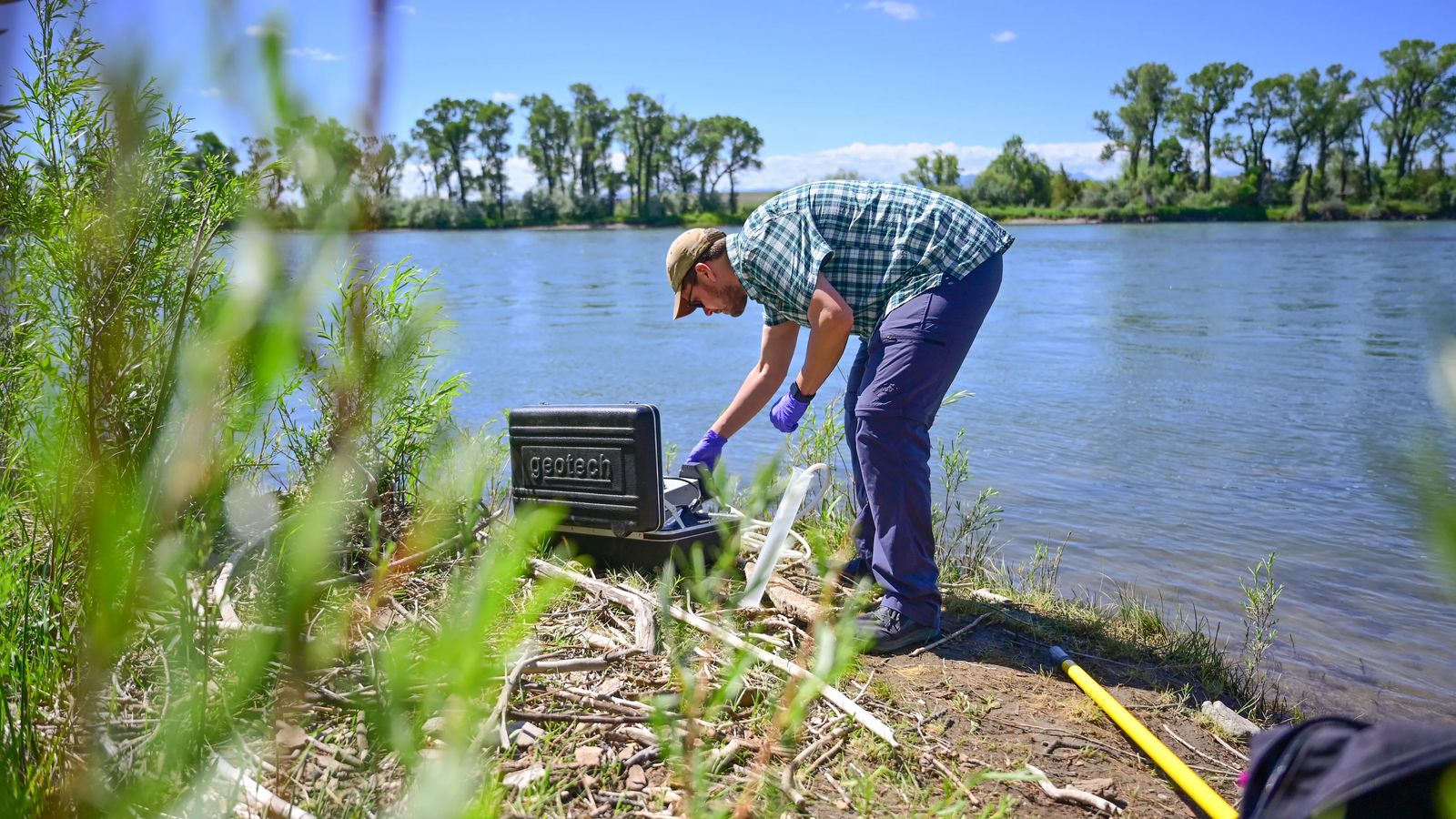
The research spans eastern Montana, with students collecting water samples at locations along the Yellowstone River and documenting conditions in the field. Back in the laboratory, other students extract DNA from those samples and sequence it to determine which species are present.
"We are studying the quality of the water in the Yellowstone River," Cuddy says, "and in particular, we're looking at how changing water quality influences microorganism life in the water."
The project has been underway for three summers, with the team now expanding its work to better understand how microorganism communities change with the seasons and from one location to another. Researchers are also examining what happens near towns and cities along the river.
That's where location matters. The Yellowstone River passes through communities of very different sizes and landscapes, and Cuddy's students are using geographic information systems, or GIS, to map their findings. The maps help the researchers spot patterns in the water and look for connections between water quality and location.
"Are we upstream or downstream from a city center?" Cuddy asks. "There are all sorts of things that we can deduce."
Those questions can help the team investigate unusual patterns that appear in its data and determine whether factors such as urbanization might play a role. But the project isn't only about understanding the river. It's also turning MSUB students into researchers themselves.
Two undergraduate students work directly with Cuddy in the field, collecting samples and making measurements along the river. Additional students work in the laboratory under the guidance of science professor Jason Comer, extracting DNA and sequencing samples.
For students, that means their classroom can sometimes be the Yellowstone River itself. They spend time outdoors collecting samples, learn quantitative chemistry and GIS, and develop laboratory skills that can carry into future careers or graduate school. Just as importantly, Cuddy gives them opportunities to work independently.
"Because these are undergrads, this is often their first experience getting to do some sort of hands-on research where they have quite a bit of independence in what they do," he says.
That independence can mean sending students into the field to collect samples on their own or assigning them laboratory analyses to complete independently.
The project also brings together students with different interests. Some are drawn to ecology or chemistry, while others are interested in social sciences and geography. The river becomes a common thread connecting those disciplines.
As with any scientific research, not every question has an immediate answer. The team has encountered microorganisms it cannot yet identify and patterns in the data that require further investigation. Rather than being setbacks, Cuddy sees those unknowns as some of the most interesting parts of the work.
"There's always something in research that crops up that you weren't anticipating," he says.
When researchers encounter something they cannot explain, they dig deeper: looking at the water sample itself, comparing it with other samples and using GIS to see whether the pattern corresponds to a particular location.
This summer's work will continue building on the team's first two years of data, allowing researchers to look more closely at seasonal changes, geographic differences, and the influence of population centers.
For the students involved, the research offers a different way to experience one of Montana's most recognizable rivers. They aren't simply looking at the Yellowstone as a landscape. They are learning to read it through chemistry, biology, geography, and data.
Much of that story exists at a scale too small to see with the naked eye. But by collecting water, sequencing DNA, and mapping what they find, MSUB researchers are beginning to piece together a picture of the microscopic life moving through the Yellowstone River, and how that life changes as the river moves across eastern Montana.
Originally printed in the October 2026 issue of Simply Local Magazine
Never miss an issue, check out SLM's digital editions here!


