
Listening to the Quiet | The Art of John Potter
March 2026 | Adventure + Outdoors
article and photos by Jessica Plance
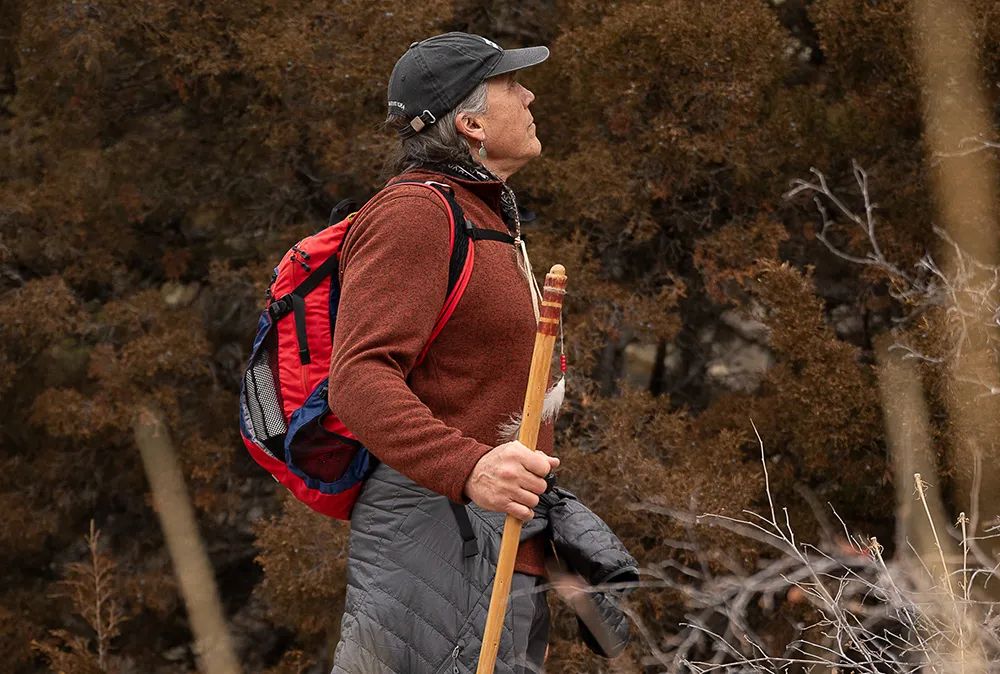
Red Lodge artist John Potter and his wife, Tracie Garfield, have always been active. They are the couple you see bundled up and moving through town in the middle of winter, snow falling softly around them while most people stay inside. Morning walks. Evening walks. Long canyon climbs. Cross-country ski days when the trails allow.
At 69, Potter is working toward a self-imposed milestone: 70 hikes before his 70th birthday. The only rules are that each hike must be longer than four miles and no trail can be repeated. It’s an ambitious goal, especially during a Montana winter, but for Potter, the hikes are less about mileage and more about intention. Walking isn’t just exercise; it’s practice. The same kind of practice that shapes his paintings.
He grew up with one foot in two worlds, living in a middle-class home north of Chicago with his mother and stepfather, and spending time on the Lac du Flambeau reservation in northern Wisconsin. This back-and-forth shaped him early. Chicago brought asphalt, noise, and tension, while the reservation offered woods, water, and his uncle, Nick Hockings.
As a teenager, when home life felt volatile, Potter escaped into the forest. He practiced sitting still, slowing his breathing and heartbeat until birds and deer resumed their natural rhythms around him. Sketchbook balanced on his knees, he drew. “When you’re still, animals come out,” he says. “Because you’re just part of the landscape.”
Over time, he started to recognize individual animals. A doe with a notch in her ear. A buck with slightly wider-set eyes. He observed generations grow, recognizing the offspring of animals he had once sketched. These animals weren’t just symbols or scenery; they were beings with emotions and memories. Good days. Bad days. Hungry. Playful. Wary.
That attention, which was patient, reverent, and deeply observant, would later define his work. But first, there were detours. In high school, an art teacher told him he had no future as an artist. Raised to respect elders, he believed her. He left for Utah State University to study wildlife science, hoping distance might settle something restless in him. It didn’t take long to realize that Western science, labs, formulas, and periodic tables did not speak to him. The art department did.
Utah State’s nationally recognized illustration program drew him back to the pencil and brush he had never truly abandoned. He graduated with degrees in illustration and fine art. Job offers followed: Hallmark Cards in Kansas City and an animation studio in Los Angeles. He turned both down, not wanting to do conveyor belt art or live in L.A.
Instead, he ended up in Greybull, Wyoming, working at a bentonite clay plant, hauling 100-pound bags of a substance used in everything from oil drilling to ice cream and cosmetics. It was tough, tiring work. An accident there left him with a concussion, broken ribs, and a strong feeling that something had to change.
In 1981, he applied for a position as a newsroom artist at the Billings Gazette. He got the job. The move was sudden, going from the factory floor to an air-conditioned newsroom. Potter became a one-man art department, creating editorial cartoons, courtroom sketches, wildlife illustrations, maps, charts, and portraits of politicians and celebrities. He even took a pay cut to make the switch. “I got to draw all day,” he says. “That was enough.”
Eventually, the paper asked him to write a column providing a Native perspective. At the time, coverage of Indigenous communities largely centered on crime or conflict. Potter’s column blended commentary with Native humor. It was sharp, unflinching, and often disarming. He didn’t pull punches. He made some enemies, but gained many friends.
“HIKING IS WALKING, BUT IT'S MORE THAN JUST THAT.
IT'S A WAKENING.”
-JOHN POTTER
Humor still runs easily through him. He recalls Wyoming Senator Al Simpson stopping by the newsroom after a cartoon ran. “John,” Simpson would say, “you’ve got my ears too small.” But beneath the wit lies something steadier.
When Potter was 16, he told his Uncle Nick he planned to return to the reservation after high school and just be an artist. Nick told him otherwise. “You need to get off the reservation,” Nick said. “There’s a quiet dignity in the natural world. Capture that. Educate people about who we were, who we are, and who we can be together if we learn to listen.” He pointed to his ears. “Not with these. With this,” tapping his chest.
Nick Hockings later became a respected cultural educator, building an 80-acre walk-through museum on the reservation. He crafted traditional lodges, canoes, and fish traps, teaching thousands of schoolchildren about seasonal lifeways and Indigenous knowledge. He earned two Emmy Awards for his work with PBS. Potter quit drinking at 28 and helped Nick do the same. Their bond deepened as their lives shifted toward clarity and purpose. That sense of responsibility lives in Potter’s canvases.
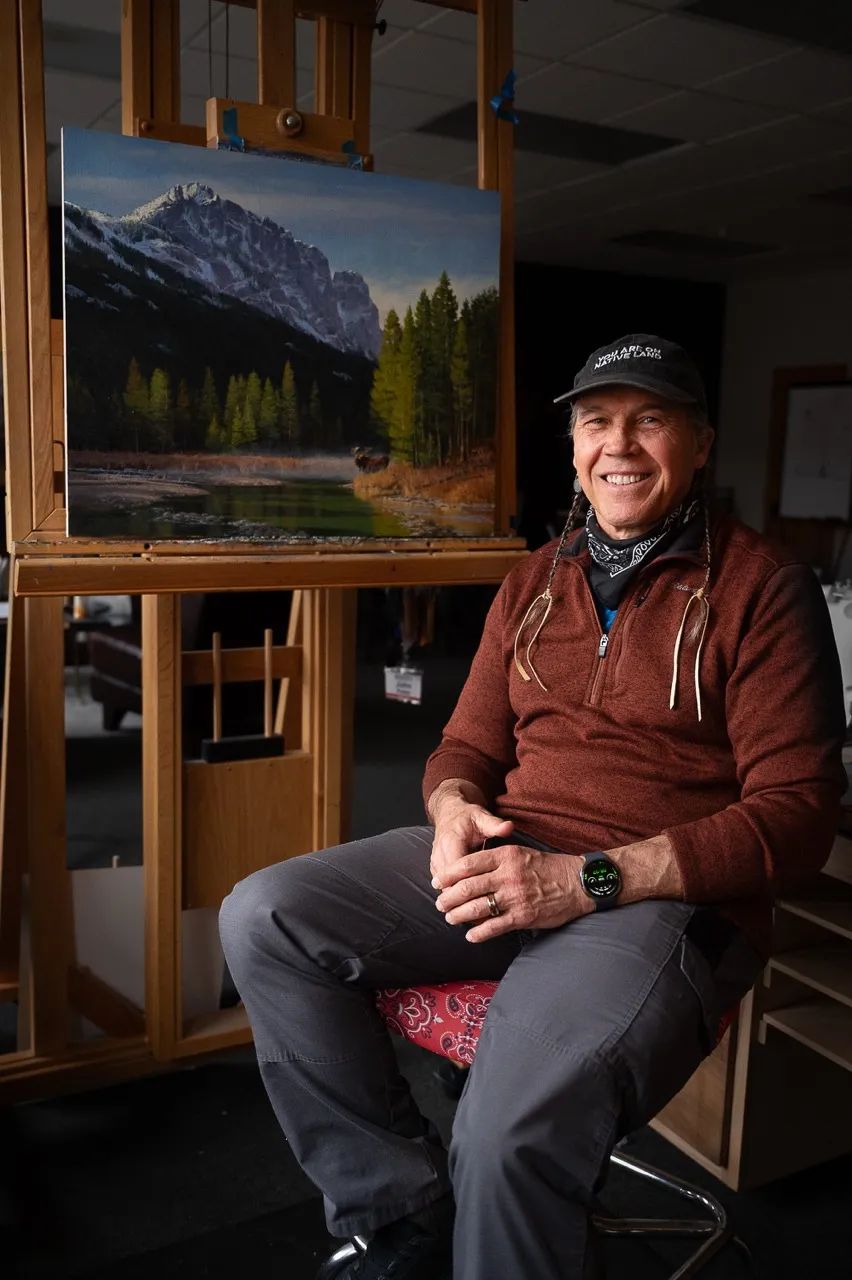
Since leaving the Gazette in 2001, he has painted full-time, building a career that includes galleries in Jackson, Sedona, and Santa Fe, along with exhibitions at the National Museum of Wildlife Art and the Buffalo Bill Art Show, where he has won top honors. His wildlife paintings are technically masterful, but what sets them apart is restraint. His elk, bison, and deer are not trophies frozen in spectacle. They are present, alert, grounded, and embody that quiet dignity his uncle named decades ago.
In 2012, Potter settled in Red Lodge. Tracie joined him in 2024, and she encourages his teaching, helps run the studio, and was the architect of the 70-hike challenge. “You’re almost 70,” she told him. “Time to give back.”
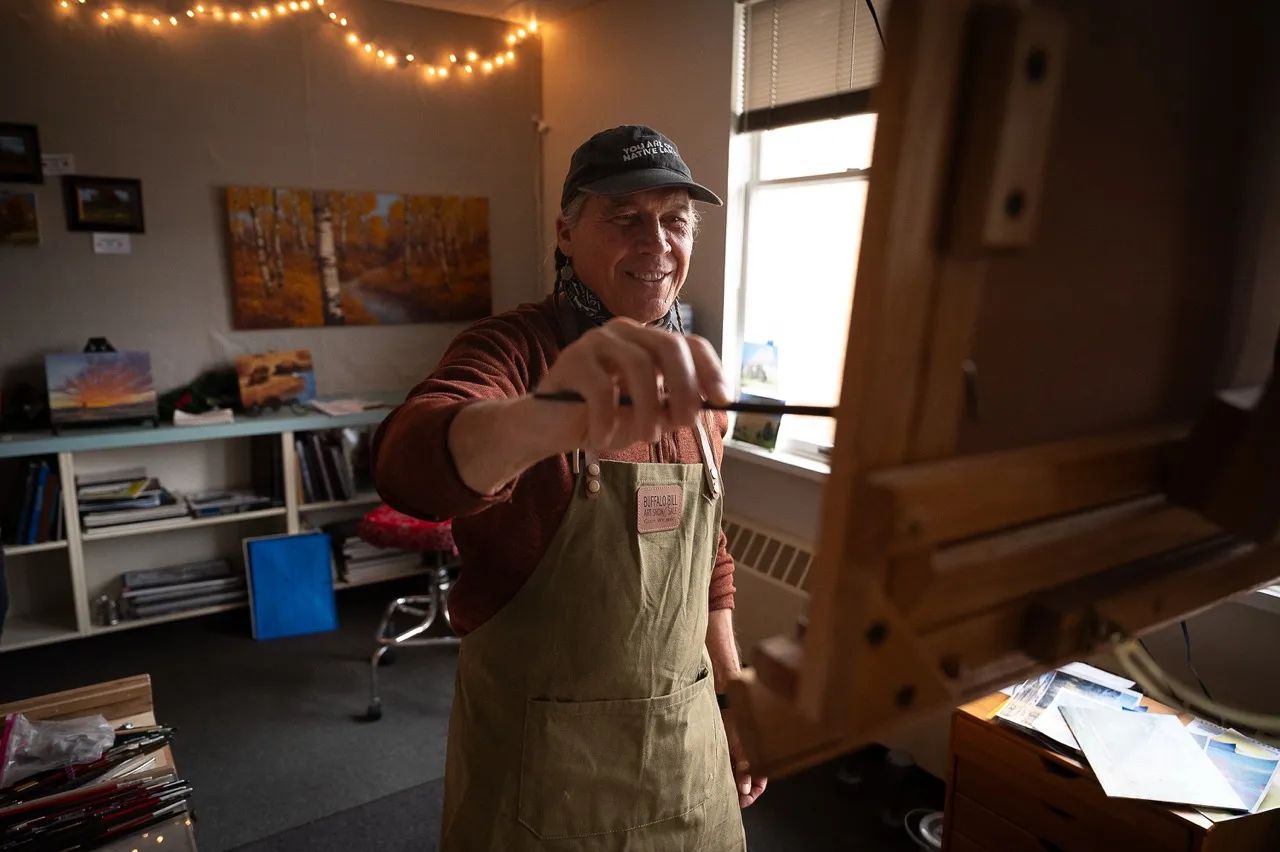
He now conducts workshops, teaching fundamentals, value, composition, and light to younger artists. For an introvert, standing in front of a group doesn’t come naturally. But he remembers what it meant to have someone believe in him when others did not. And he keeps walking.
“Hiking is walking, but it's more than just that. It's a wakening.” He said, “It reawakens that primal part of us all that needs connection with the Earth and the Wild. Can't do that on the couch.” On the trail, the layers peel away, the awards, titles, and expectations. He becomes what he was as a boy in the Wisconsin woods: still, attentive, listening.
In a culture that values speed and spectacle, John Potter paints and walks toward something different. Something slower. Something quieter. He captures the dignity of simply belonging to the land.
Originally printed in the March 2026 issue of Simply Local Magazine
Check this article out in the digital issue of Simply Local here!


