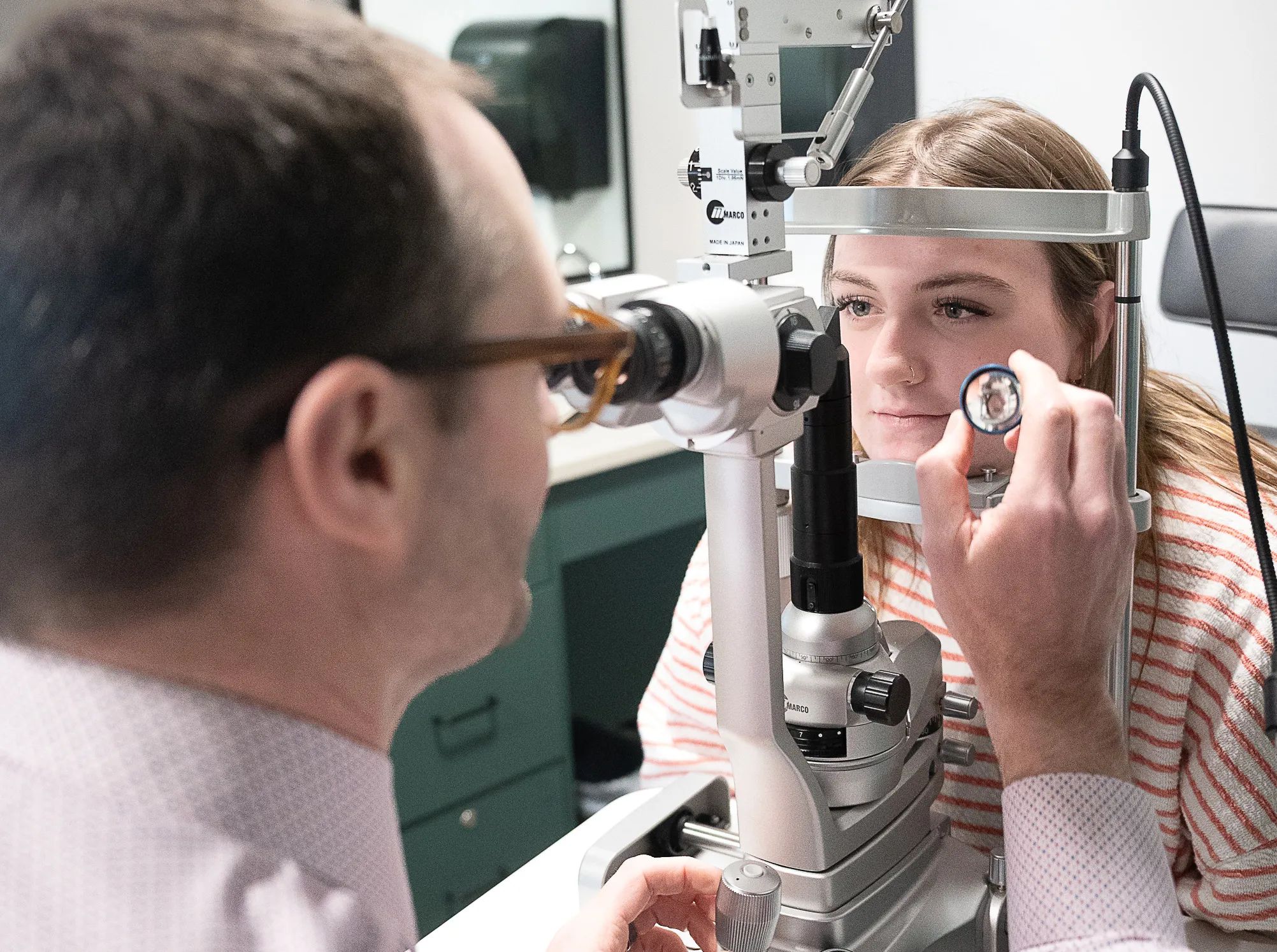
IN FOCUS: Yellowstone Eye Care’s Next Chapter
April 2026 | Health + Wellness
article by Maria Weidich | photo by Jessica Plance
For the doctors at Yellowstone Eye Care, vision has always felt deeply personal. Dr. Shawn Lebsock says that the calling drew him in from the start. “The eye is just such a unique organ,” he says. “To most people, their most precious sense is their eyesight, and we need to care for that precious gift.”
For over 75 years, families in Billings have trusted the same clinic with their eyesight. Since opening in 1951, Yellowstone Eye Care has grown naturally from a small family practice into a key part of healthcare, blending modern technology with personalized care that keeps generations of patients returning.
Today, a close-knit team of doctors bears the responsibility of guiding the clinic into its next chapter. Alongside Dr. Lebsock is Dr. Joseph Steiner, who joined the practice in 2011, followed by Drs. Angie Biskupiak and Dixon Maggard, who came on board in 2022. Together, they embody a new generation of providers rooted in the clinic’s longstanding tradition of relationship-based eye care.
THE EARLY YEARS
Decades before the name Yellowstone Eye Care was displayed over the door, the practice was simply known as McBride Optometry. Dr. James McBride started the clinic in 1951 with a clear philosophy: treat your neighbors like family. Over time, his three sons, Drs. Doug and Kevin, as optometrists, and Tim, as the clinic’s longtime optician, built a true family business that served Billings for many years.
As a child, Dr. Doug remembers riding his bike to visit his father at work. “The clinic never felt separate from family life; it was an extension of it,” he recalls. “Those visits left a lasting impression on me. Not just of my father’s work ethic, but of his commitment to care for people and serving the community.”
“I saw the passion that my dad had for optometry and felt excited to join my family in continuing to grow the office and expand the level of care we offered our patients,” echoes Dr. Kevin. “We were a lifelong part of the community, and we worked hard to build trust and provide excellent care to our patients.”
Their younger brother Tim joined the team as an optician in 1979 and remained the clinic’s most expert glass and contact lens fitter for 45 years, longer than either of his brothers. “I enjoyed working with dad’s patients who were lifelong patients. I know our father was very proud of his legacy that lived on.”
PASSING THE TORCH
But the transition to today’s team didn’t happen overnight. For years, Drs. Steiner and Lebsock worked closely with the McBride brothers, learning not only the clinical aspects of optometry but also the culture of care that shaped the practice.
“We saw firsthand that they were excellent practitioners who understood and embraced our mission of quality, family-centered care,” Dr. Doug recalls. “These doctors will continue the legacy of quality, caring eye care for the Billings community.”
“Dr. Steiner and Dr. Lebsock have honored what our father began in 1951 and what we built during our own careers,” echoes Dr. Kevin. “They are now taking the practice to higher heights, and we couldn’t ask for more in transferring the mission of exceptional eye care to these doctors.”
“We’re a big, small town,” Dr. Lebsock adds. “That’s what separates this community from a big city. We provide the same care we’d provide our own family and friends, just like the McBride brothers demonstrated. They passed the torch, and we’re gonna take that same approach.”
NEW NAME, SAME COMMITMENT
By 2023, all three McBride brothers retired, and the doctors knew the next chapter needed room to grow. “The local nature of the eye clinic is not lost on the doctors at Yellowstone Eye Care,” says Dr. Lebsock. “We wanted to create stable recognition and something that lets you know we’re reliable for many years to come.”
“Yellowstone” may not be flashy, but it’s familiar, just like the clinic itself. While the name on the building might be new, the commitment behind it hasn’t changed a bit. Eye care is becoming more and more important to the general population, Dr. Steiner explains. “Growth is essential. Modern technology, procedures, and equipment are a bright spot for me. We want to be at the forefront of newer technology and always be practicing at our highest scope of practice.”
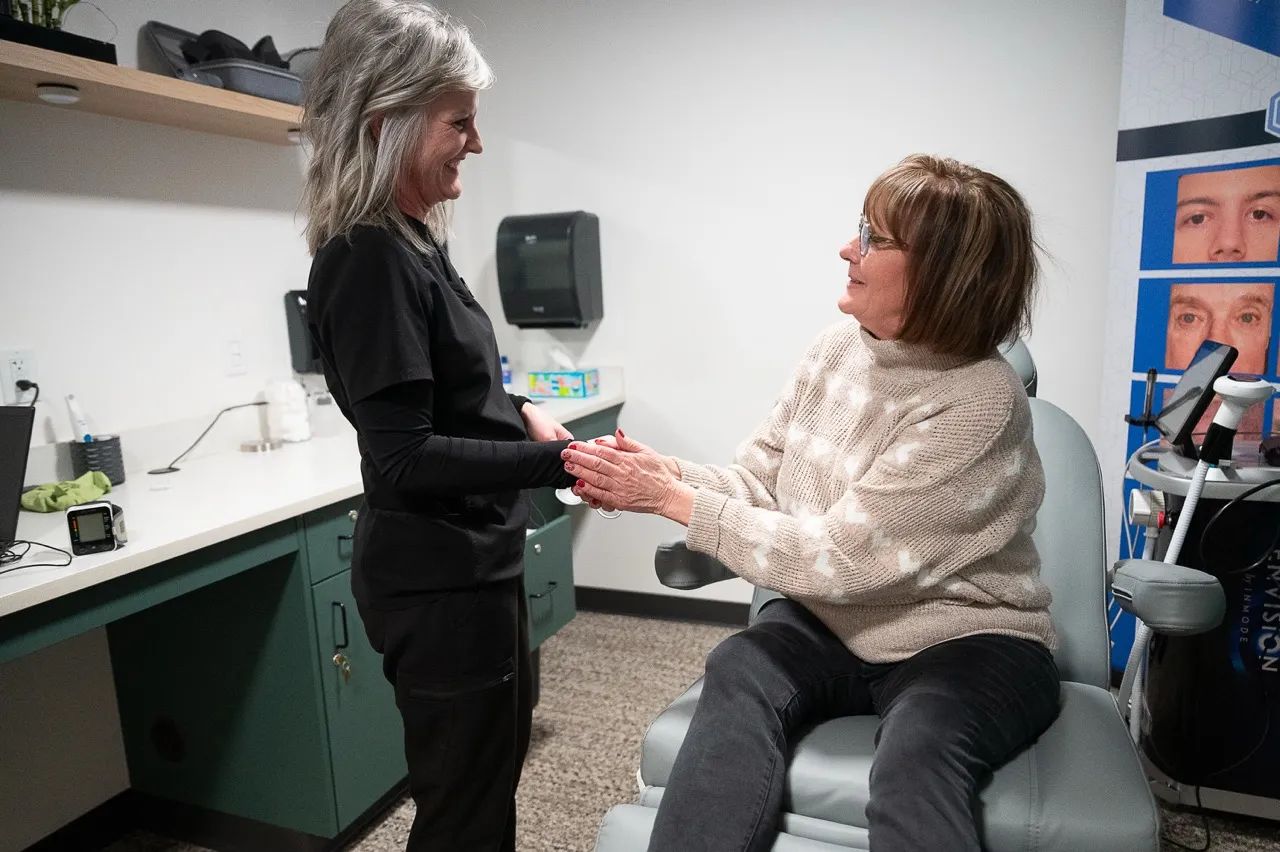
MORE THAN VISION CARE
Today, an eye exam at Yellowstone Eye Care often reveals more than just vision clarity. Vision health is closely linked to overall body health, making each appointment an opportunity to identify issues that extend beyond a simple prescription update.
Using technology and retinal scans enables the eye to serve as a window into the rest of the body, Dr. Steiner explains. Such images can be used as a diagnostic tool to help detect vision problems or even life-threatening disorders and diseases, even before symptoms appear. “Neurologically speaking, eyes are one of the most active nerves that you can see in the body’s normal anatomy without an MRI or surgery. The blood vessels in the back of the eye can tell us about cardiovascular conditions, blood pressure, and arterial disease; there are so many things that the eye can tell us.”
“We’re here to take care of your injuries, diseases, not just the basics,” he says. “We push to know whatever we can do within our scope that allows us to care for our patients.” Recent legislative changes have even broadened that scope to include diagnosing and treating eye disease as well as performing minor laser procedures, a significant departure from the optometry of decades ago.
BILLINGS AND BEYOND
In addition to growing with modern technology, Yellowstone Eye Care expanded to Red Lodge this January, bringing care closer to many patients who previously had to drive to Billings. “Red Lodge feels like an extension of Billings, and we have a lot of patients who live there,” Dr. Steiner says. “The biggest positive is seeing how happy they are to have this service, where they don’t have to drive an hour. It’s a tight-knit community, and they’re very appreciative of our time.”
Even for patients who believe their vision is “fine,” the doctors agree that small adjustments can make a big difference, leading to fewer headaches, less strain, sharper focus, and better quality of life.
“We tell our patients we want them to work smarter, not harder,” Dr. Steiner adds. “If there is measurable strain, you don’t have to live with it. Sometimes a simple pair of glasses can help your eyes relax. The more help we can give them, the better. We’ll do whatever it takes for you to get you to see your sharpest.”
After 75 years, Yellowstone Eye Care’s mission remains both clear and personal: to help neighbors see their best and care for them like family, just as the McBrides did. For Drs. Steiner, Lebsock, Biskupiak, and Maggard, it’s more than a profession; it’s a responsibility they uphold every day.
“We truly care about our patients,” Dr. Lebsock says. “We listen, we hear what they’re telling us, and we provide the same care we’d provide to our own family and friends. We get two eyes. It really is a gift, and we don’t take that lightly.”
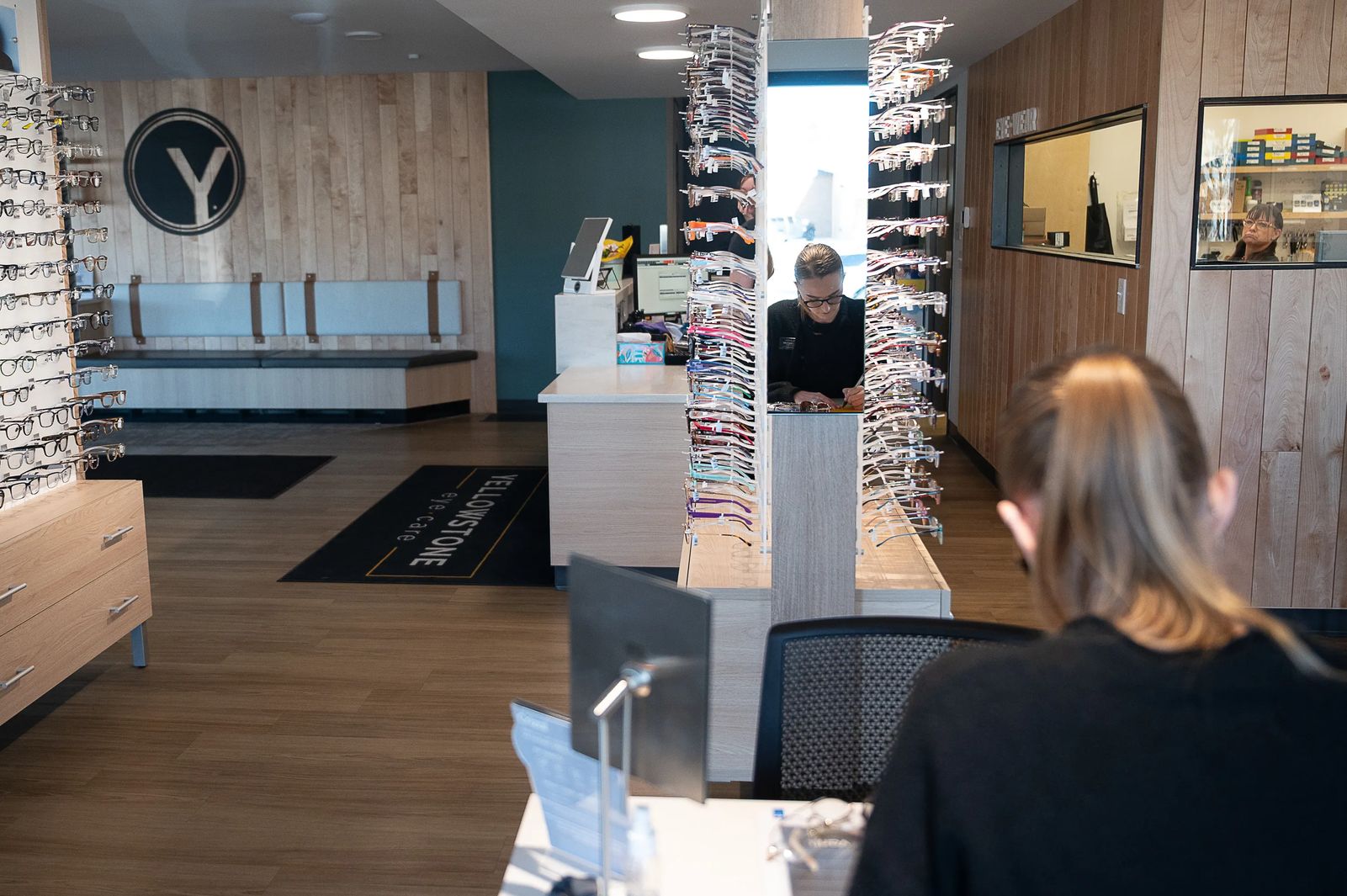
5 WAYS TO PROTECT YOUR VISION
From long days glued to our screens to the bright Montana sun, our eyes deserve some attention. The team at Yellowstone Eye Care believes many common vision issues are preventable with simple everyday care. Here are their favorite tips for keeping our eyes healthy and our vision sharp.
Follow the 20-20-20 Rule
Hours spent on computers, tablets, and phones can make eyes tired, dry, and strained. The 20-20-20 rule is easy to follow: every 20 minutes, look at something 20 feet away for at least 20 seconds. This allows your eye muscles to relax and helps prevent fatigue, dryness, and headaches from long screen use. Additionally, limiting screen time, especially an hour before bed, and keeping screens at a proper height and distance from your eyes is recommended. “Otherwise, they’re gonna run out of gas and they’re gonna let you know it,” Dr. Steiner says.
Be Sun Smart
Sun protection isn’t just for your skin. Prolonged exposure to ultraviolet rays raises your risk of cataracts, macular degeneration, and even eye cancers. Choose sunglasses that block 100% of UVA and UVB rays whenever you’re outdoors, even on cloudy days. Consider wraparound styles for the best protection, and don’t forget hats and kids’ sunglasses too.
Eat for Eye Health
Carrots alone won’t improve your vision, but a colorful diet can support eye health. Leafy greens provide antioxidants that protect against macular degeneration, omega-3s benefit the retina and dry eyes, and vitamin C and A-rich fruits and vegetables support overall vision, especially at night.
Rested Eyes See Better
Your eyes need rest, too. Although they never truly stop working, sleep helps restore tear production, repair tissues, and prevent dryness and irritation. Lack of sleep often causes eye spasms, dry eyes, blurry vision, and light sensitivity. Aim for 7-8 hours of quality sleep each night to keep your eyes refreshed and ready for the day.
Don’t Skip Your Yearly Eye Exam
Even if your vision seems perfect, don’t skip your yearly exams. “If there is measurable strain, you don’t have to live with it,” says Dr. Steiner. Additionally, many serious eye conditions, including glaucoma, macular degeneration, and diabetic retinopathy, develop gradually without obvious symptoms. An annual comprehensive eye exam not only checks vision but can also detect early signs of systemic health issues like diabetes and high blood pressure. Children should have their first exam at six months, another at age three, and then before starting school.
Originally printed in the April 2026 issue of Simply Local Magazine
Check this article out in the digital issue of Simply Local here!