Dr. Heather Hansen: A Doctor Montana Kids Can Count On
February 2026 | Health + Wellness
article by Maria Weidich | photo by Littles + Big Photography
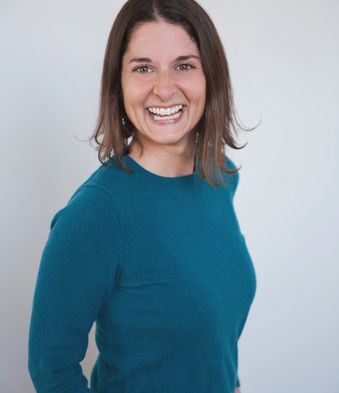
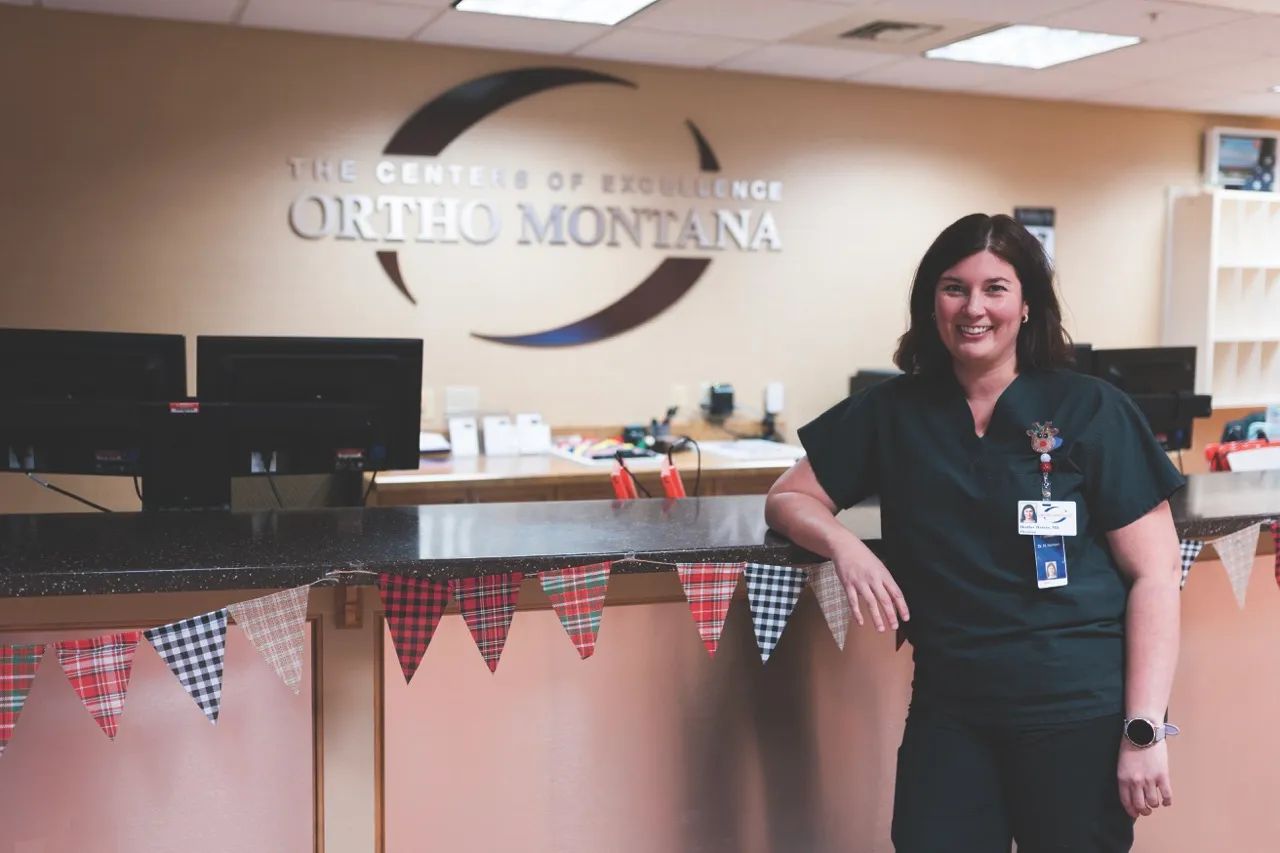
When a child breaks a bone, developes scoliosis, or is born with a growth-related condition, specialized care matters. Dr. Heather Hansen is Montana’s only full-time, fellowship-trained pediatric orthopedic surgeon, dedicating her practice entirely to growing bodies. For families in Billings and across the state, that means access to expert pediatric orthopedic care close to home.
A CALLING YEARS IN THE MAKING
Dr. Hansen’s path to expertise spans continents and over a decade of training. Originally from Prince Albert, Saskatchewan, she completed medical school and residency at the University of Saskatchewan College of Medicine. “I love the variety of things we get to do, how hands-on it is, and you kind of get instant results, too,” she says of orthopedics. “We get to give people their mobility back.”
Dr. Hansen discovered her passion for pediatrics in her third year of residency. That realization led her to pursue an additional year of specialized training through a pediatric orthopedic fellowship at Brown University in Providence, Rhode Island. “Thirteen post-graduate years of training is a big investment and a big risk,” she says. “You hope you’ve found your passion before you’re done.” For Dr. Hansen, that trajectory proved pivotal and is now the best decision of her life.
DEDICATION THAT GOES THE DISTANCE
When Dr. Hansen joined Ortho Montana in 2017, she became Montana’s first fellowship-trained pediatric orthopedic surgeon, filling a long-standing gap in care. Nearly nine years later, she has built lasting roots in Billings, treating nearly 13,000 patients and performing more than 1,945 surgeries.
As a result of her long-term commitment, Dr. Hansen has become deeply rooted in the region she serves. “That’s one of the best things about this area of the country. People are so down to earth, and if you make that personal connection, word of mouth spreads fast.” She adds, “There is a totally different mindset here, and maybe it’s just that they really appreciate someone seeing them, which really adds to the job satisfaction.”
Dr. Hansen’s dedication extends well beyond clinic doors. Even on weekends, if she’s in town, she will come in to fix a child’s fracture whenever she can. “I’m a little over the top that way,” she laughed. “But it just means a lot to me. It’s really an honor for me to get to come in and take care of these kids and families.”
Dr. Hansen is keenly aware of her role as the region’s only pediatric orthopedic specialist and travels to Bozeman and Miles City as needed to ensure children across the area have access to care.
SPECIALIZED CARE FOR GROWING BODIES
Pediatric orthopedic surgeons do far more than fix broken bones. They diagnose, treat, and manage the full range of musculoskeletal conditions in children, including limb and spinal deformities identified at birth or later in life. Dr. Hansen specializes in both operative and non-operative treatment of pediatric musculoskeletal problems.
“Pediatrics has such diversity, from infants to moody teenagers,” she explains. “There are so many challenges, but I love the variety. It’s not the same thing again and again, and I get to see a little bit of everything. That’s what really attracted me to it.”
While pediatric orthopedic surgeons typically care for patients from birth to age 18, Dr. Hansen’s practice extends beyond that due to limited regional resources. “With fewer specialists in the area, I’m seeing 35-year-olds with cerebral palsy and 40-year-olds with Down syndrome. If there is no one else around to help some of these adult patients, I will see them.”
Still, transitions can be hard, she says. “Typically, I will discharge a healthy patient at age 18, but even then, I have trouble saying goodbye.”
WHERE KIDS COME FIRST
Ask Dr. Hansen what she enjoys most about her work, and her answer is immediate: the kids. “Not a day goes by in my office where I don’t burst out laughing at something a kid does or says. They are
ridiculous, and what comes out of their mouth is so unexpected,” she laughs. “I just don’t see why people wouldn’t want to take care of kids all the time!”
“They keep me having fun on the job,” she adds. “You don’t take yourself too seriously when there’s a little kid in the room that you’re trying to relate to. I think they really keep the lighter side of medicine on the forefront of my practice.”
Even the youngest patients are given a voice in Dr. Hansen’s exam room. “I think a lot of healthcare providers put the kid in the corner, simply because it’s easier and faster to talk to the parent,” she explains. “I’m talking to the six-year-old,” she laughs. “I want them to tell
me their version of the story. I want them to be involved. It’s their appointment, and I think they buy in a lot more when they feel seen and acknowledged. Even if their story or opinion doesn’t always make sense, I want them to feel like they have a voice in my exam room.”
That partnership is one of the reasons this specialty is such a good fit. “That’s the nice thing about pediatrics,” she adds. “Kids want to get better, they want to get back to what they were doing, and they’re so good at healing, it makes my job easier!”
Above all, Dr. Hansen wants both children and their families to feel understood and supported. “I want them to feel like they were heard and their fears, worries, or concerns were acknowledged. I try to be really cognizant of that. The child is important, but this is a big deal to the parents as well.”
SUPPORTING HEALTHY GROWTH
For parents, Dr. Hansen’s message is clear and rooted in prevention. “Keep your child as active as possible,” she recommends. “It doesn’t have to be organized sports or a big training regimen, but just keep them active.”
She also cautions against year-round specialization in a single sport. “I don’t want a kid throwing a baseball or kicking a soccer ball all year round. It’s too hard on their growing and developing bodies,” she says. Instead, she recommends that children participate in a fall sport, a winter sport, and a spring sport, allowing time for rest, recovery, and growth.
In fact, much of her day-to-day work centers on overuse injuries, a growing concern as youth sports become more intense and specialized. “Kids are pushing themselves so hard nowadays. These kids are training at a different level, and I think that leads to overuse injuries and burnout. If they never have a day off and no time to rest and recover, even though they're getting faster and stronger, there are consequences.” One fundamental truth in pediatric orthopedics, Dr. Hansen echoes, is that children aren’t just small adults. Their growing bodies require specialized care, especially around vulnerable growth plates, the
developing tissue at the ends of long bones. “The growth plate dictates how your bone is going to grow. If there’s an issue there, then you could be set up for lifelong issues.”
“Growth plates are vulnerable in certain sports to overuse, and that’s the kind of thing parents need to know. It’s huge,” she stresses. “It’s the foundation for the bones, so I harp on that in every lecture I give because it’s just so important.”
Dr. Hansen’s philosophy for families is simple. “It’s important to stay healthy and active and try to vary what you do in terms of physical activity,” she says. “But get out there and live life; if the unexpected happens, come find me.”
From the exam room to the operating room, Dr. Hansen is guided by a simple goal: helping kids heal, grow, and get back to being kids. For families facing injuries or uncertainty, her steady presence offers both expertise and reassurance. “It’s an honor to have someone come to you and ask you for advice and put their child’s care in your hands,” she says. “That’s a huge responsibility, but also a huge honor.”
Keeping Montana Kids Moving: INJURY PREVENTION TIPS
Dr. Hansen encourages parents to keep kids active while protecting their growing bodies. Here are her top tips for preventing injuries and keeping sports and physical activities safe and fun.
- Avoid early sports specialization: Encourage kids to try a variety of activities instead of focusing on just one year-round
- Schedule rest days and off seasons: Give growing bodies time to recover.
- Use proper footwear and protective gear: The right equipment can prevent many injuries.
- Pay attention to pain that worsens: Don’t ignore persistent aches or discomfort.
- Let your child have a say: Involving kids in choosing activities keeps them engaged and motivated.
- Keep sports and activities fun: Enjoyment is just as important as skill-building or competition.
Originally printed in the February 2026 issue of Simply Local Magazine
Check this article out in the digital issue of Simply Local here!