
A Kitchen Built For Comebacks
April 2026 | eat + drink
article by Jennifer Miller | photos courtesy of Passages
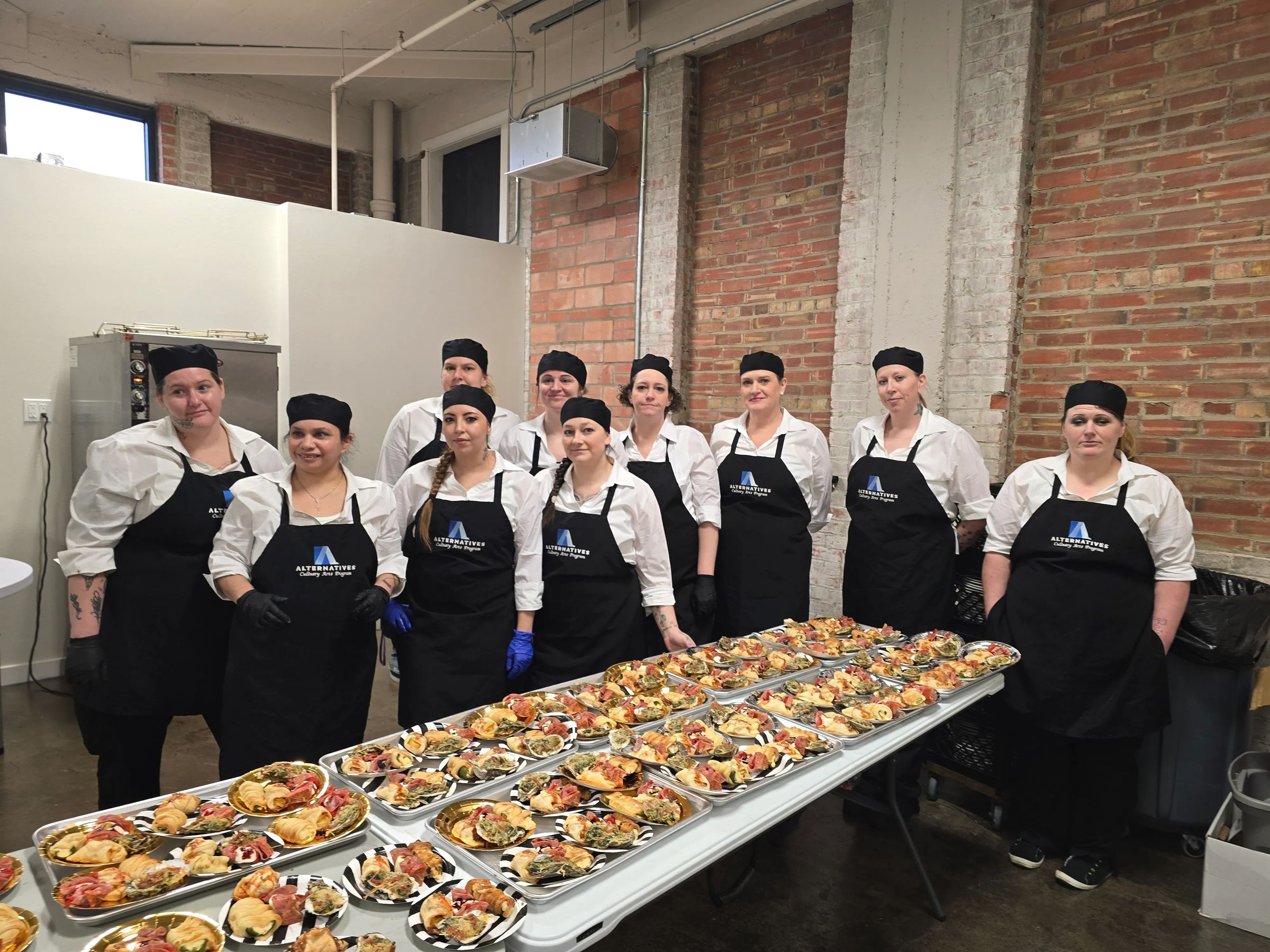
I sat down with Travis Dickinson, the Food Services Manager, and Gina Poor, the Director of Passages, to discuss CAP, Montana’s longest-running corrections culinary program. I was immediately impressed by the creativity and passion of CAP’s students.
When I asked about the most creative things students had made, Travis didn’t hesitate. “I had one woman who was determined to make emoji cupcakes,” he says, grinning. Gina nods, recalling another student who created an elaborate cotton-candy castle cake. “Everything on it was like this castle made entirely of cotton candy,” Travis adds.
CAP, in a nutshell, is an 18-month program where women build knife and life skills side by side. Here, Norwegian casseroles made with chicken, bananas, and peanut butter can be a perfectly normal Tuesday. Unlike a typical restaurant kitchen, which Travis describes as “always chaotic, with loud music and people yelling,” this kitchen runs on patience and the belief that something better is possible.
THE CHEF FOR A DAY
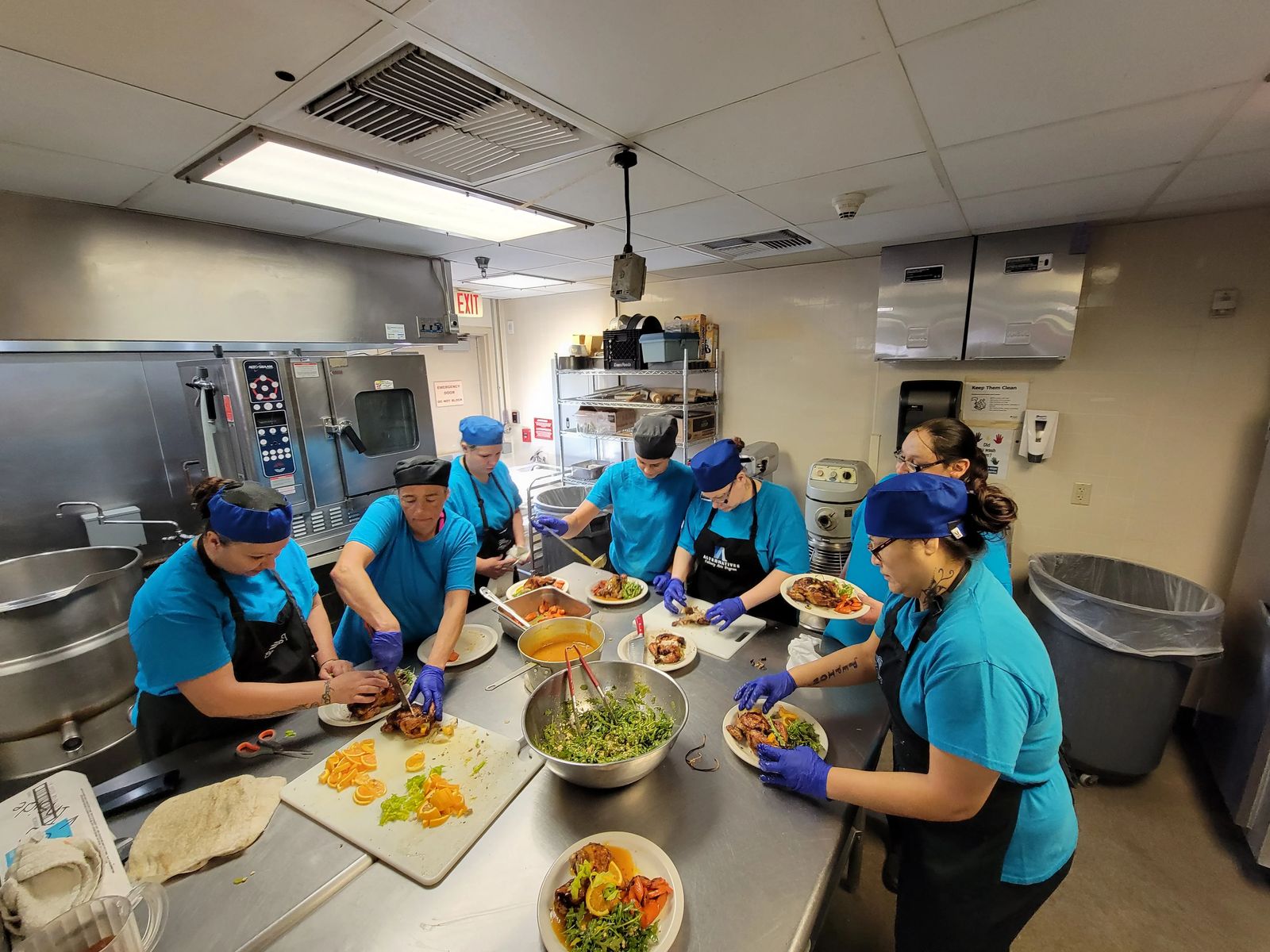
The highlight of the program comes in the final weeks, when each student serves as head chef for a CAP lunch. For two weeks, they run the kitchen, choose a country or culture to spotlight, build a full menu from the ground up, test recipes, and shape the experience from start to finish. One recent graduate, a Blackfeet tribal member, created a menu centered on Missing and Murdered Indigenous Women. She served Native American tacos while educating
CAP students about a crisis that hits close to home.
“We challenge them to be the chef for the day,” Travis explains. “They’re the boss. They’re the leader. And it’s not just a menu; it’s the whole experience.” That includes decorations and centerpieces, often made from nearly nothing during trips to Hobby Lobby. Students taste ingredients they may never have encountered before. If they don’t like something, they still have to try it. “We make them explore their boundaries,” Travis says. “We want them to broaden their horizons.”
MORE THAN JUST COOKING
Gina says many women who arrive at CAP are moderate- to high-risk offenders who’ve already participated in other programs. Many arrive with low self-esteem and limited work experience. “Many don’t have much experience being around other people or working around other people,” she explains. “But going to these events and working with Travis and his crew, their self-esteem, and how they feel about themselves, increases. And that’s going to increase their ability to stay out.”
Students help provide 1,200 meals a day, year-round, seven days a week. At that pace, they’re also learning a broad range of culinary techniques, including handmade pasta, wild game, quick breads, and “hobo bread” baked in aluminum cans. They make bag bread in a Ziploc, poke, Japanese tostadas, and yes, the poop emoji cupcakes. “We try to instill self-worth,” Travis says. “We tell them the past is the past. There is a life after what you’ve done and the mistakes you’ve made.”
“We try to instill self-worth, We tell them the past is the past.
There is a life after what you’ve done and the mistakes you’ve made.”
-TRAVIS DICKINSON
THE GRADUATION GIFT
After 18 months of evening shifts, morning prep work, and pre-release, students graduate and receive embroidered chef coats with their names stitched on. They also receive a beginner’s cookbook and, most importantly, a personalized cookbook filled with every recipe they’ve learned and want to remember. CAP Manager Larissa assembles these custom cookbooks with care.
They also receive the benefit of potential job placement. The list of community partnerships is extensive. Travis explains that over the past three to four years, about 75-80% of graduates have entered the food service industry, and local restaurants have actively recruited them. Travis hears it from friends in the industry: “Thank you for sending so-and-so my way because she’s working circles around people who have been working here for years.”
AN INVITATION
Travis and Gina want Billings restaurant owners to know that CAP graduates are committed, accountable, and ready to work. “You are getting someone who is committed,” Gina says. “Their self-esteem is good. They have basic food knowledge and the capability of doing just about anything in Billings as far as prep work, anything in the kitchen.” More than that, they’re ready to keep growing and learning.
To support the program, Passages welcomes event inquiries. In a community increasingly open to alternatives to incarceration, CAP offers something genuinely hopeful. It shows women, in practical ways, that mistakes don’t have the final word. It makes room for creativity, even on hard days. And it proves that sometimes the best recipe includes a second chance. Also, every so often, emoji cupcakes.
By the Numbers
PROGRAM LENGTH:
18 months (longest in Montana Department of Corrections)
CAPACITY:
10-15 women at a time
MEAL SERVICE:
1,200 meals per day, 365 days a year
PLACEMENT RATE:
75-80% go into food service partnership: Montana Board of Labor and Industry (apprenticeship certificate upon completion)
WHAT THEY LEARN:
Wild game, seafood, baking, different cooking temperatures, handmade pasta, sanitation, punctuality, teamwork, work ethics, and much more.
SPECIAL EVENTS:
Catering for nonprofits, community organizations, and events at the Capitol
GRADUATION GIFTS:
Embroidered chef coats, beginner cookbooks, personalized recipe
collections
website: https://altinc.net/passages/
Originally printed in the April 2026 issue of Simply Local Magazine
Never miss an issue, check out SLM's digital editions here!


