
Between Two Generations
November 2026
Article byMaria Weidich
Megan Patterson had already spent years as a caregiver before she had children. In 2013, when her father was just 60, a stroke caused by a rare genetic condition changed his life and the course of her own. The stroke left him paralyzed on his right side and with aphasia, a condition that impaired his ability to speak and write.
Within a few months, Megan left a thriving career and life in Portland, Oregon, to move closer to her parents in Wyoming. In the years that followed, she helped her mother manage her father’s daily needs and medical appointments as the family adjusted to a new reality.
Then came children. Today, Megan and her husband live in Billings, raising their two kids, ages 7 and 9, while she continues to help care for her father from several hours away. Thirteen years after his stroke, a phone call can still mean dropping everything and heading back to Wyoming. Somewhere along the way, Megan became part of a growing group of adults caring for generations on both sides of them: the sandwich generation.
What is the Sandwich Generation?
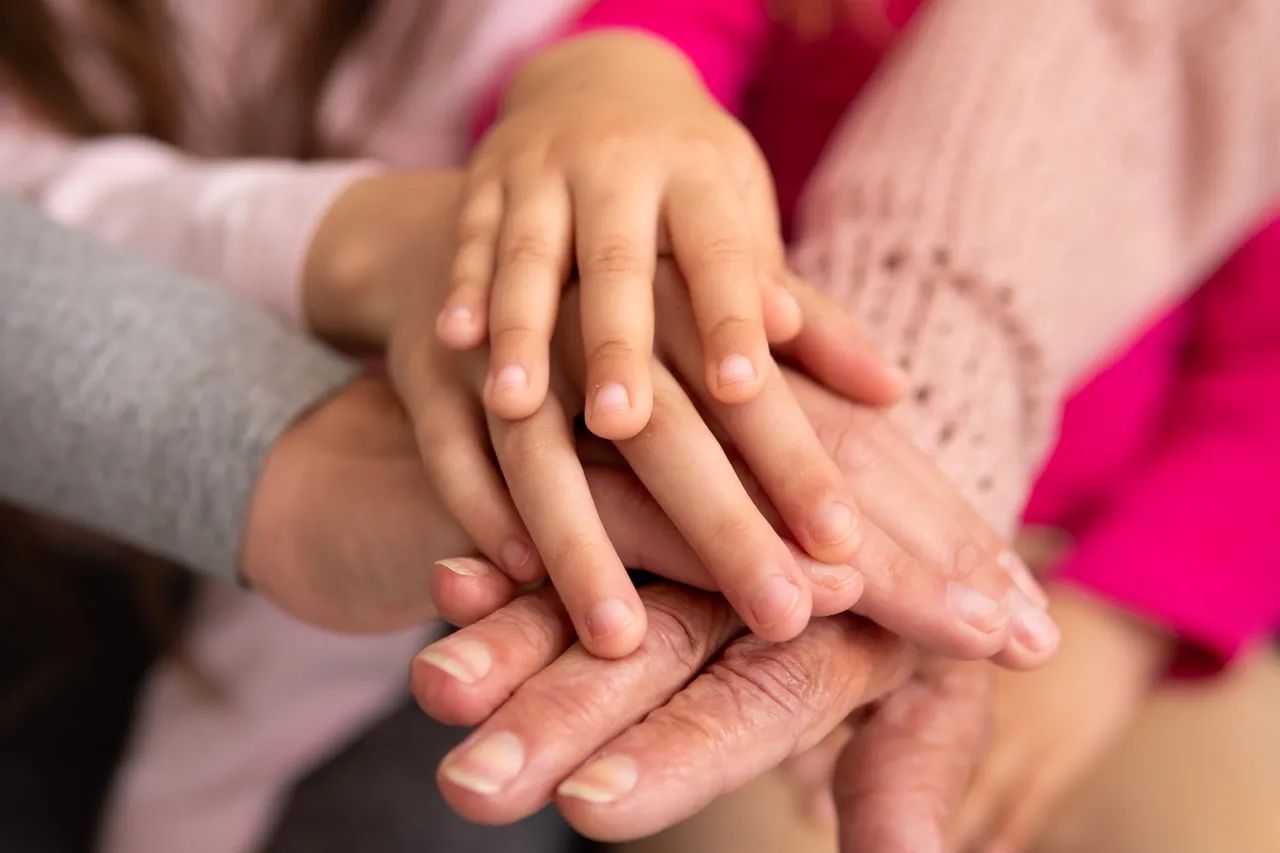
The term “sandwich generation” describes adults who are raising their own children while supporting and caring for their aging parents. With November recognized as National Family Caregivers Month, it’s a fitting time to acknowledge the often-unseen work of family caregivers, including those caught in the middle.
The “care” involved isn’t just hands-on medical care. It can mean coordinating appointments, managing medications, navigating insurance, providing transportation, fielding phone calls, or simply being the level-headed person who steps in when something goes wrong.
For the sandwich generation, one of the biggest challenges is that every part of life is pulling on the same limited hours, says Tyler Amundson, director of mission and development at Allies in Aging. “A school concert, a work deadline and a call from Dad’s doctor can all land on the same afternoon,” he explains. “We see people using their vacation days for their parent’s appointments and then having nothing left for themselves or their kids.”
There’s an emotional shift happening, too. “It’s hard to become the one making decisions for a person who used to make decisions for you,” Tyler says. “When you add children watching and learning from all of it, caregivers feel they have to hold everything together for everyone.”
When “Helping Dad” Becomes Caregiving
Tyler emphasizes that the caregiving role doesn’t always arrive all at once, and it doesn’t always mean around-the-clock or hands-on care. “When your parent’s well-being starts to depend on what you do (managing medications, coordinating appointments, handling bills, or rearranging your own life around their needs), you’re a caregiver,” he says.
Naming that role matters. “The words we use shape the help we look for,” he explains. “Someone who is ‘just helping Dad’ usually doesn't think support groups, respite care or caregiver resources are meant for them.” Once someone begins to see themselves as a caregiver, they may also begin to see those resources differently. “It gives them permission to say this is real work that deserves care in return.”
Pulled in Two Directions
For Megan, navigating these competing demands has meant continually reassessing her priorities. “You really have to reevaluate what your values are and what matters more in that moment. You don’t necessarily put yourself on the back burner, but you do put a pause on the direction you were going.”
Caring in two directions also means living with a certain amount of unpredictability. Life in Billings may be humming along with work, school, and kids’ activities when a call from her mom suddenly rearranges everything. Her father’s condition can still lead to unexpected complications, sometimes requiring her to leave at a moment’s notice. It’s a reality her family has learned to roll with.
Knowing where her priorities lie doesn’t always make the choice easy, she says. “There are times when I’ve had to decide where am I needed the most?” Sometimes, being there for her parents means missing something at home. “It could be the soccer game I miss out on, or they don’t get to do a certain activity because I’m gone.”
In the beginning, those choices came with guilt. Over time, though, Megan began to lean on the village her family has built in Billings. If she couldn’t make it to a soccer game, she might reach out to another parent on the sidelines with a simple request: “They could use an extra loud voice at the game today.”

When the Caregiver Starts Running on Empty
Megan eventually learned how to make room for both generations, but making room for herself would take longer. Just a couple of years after her father’s stroke, she began facing health challenges of her own. Looking back, she recognizes how little margin she had left for her own well-being. “It can sneak up on you quickly,” she explains, “because you think you can do it all.”
“Burnout rarely arrives all at once,” Tyler adds. “It shows up as exhaustion that sleep doesn’t fix, a short temper with your kids or spouse, dropping the things that used to fill you up or feeling resentful, and then guilty for feeling resentful.”
Other warning signs are easier for caregivers to overlook, Tyler says, such as skipping their own appointments, not eating well, or pulling away from friends. “Many see exhaustion as the cost of loving someone well,” he says. “I wish people would notice sooner when their world has gotten very small, where every conversation, every calendar entry and every worry is about their parent’s care. That’s the moment to reach out, not the moment to push harder.”
You Can’t Do It All, And You Don’t Have To
Recognizing burnout is one thing. Knowing what to do about it can be much harder. Protecting a caregiver’s well-being doesn’t necessarily mean squeezing one more thing onto an already-full calendar in the name of “self-care.” Sometimes, it means taking something off.
For Megan, that has meant recognizing there are plenty of ways to care for someone without always being physically present. “Sometimes your way of showing up is to be there emotionally and there’s nothing wrong with that, because you have to be careful not to completely sacrifice yourself.”
Asking for help isn’t an admission of failure, Tyler adds. “Many caregivers believe if they loved their parent enough, they’d be able to do it all themselves. The opposite is true,” he says. Bringing in support, he explains, is one of the most loving things a caregiver can do, for their parent and for themselves. “No one is meant to carry this alone, and the families who do best are the ones who let their community help carry it with them.”
In Yellowstone County, those resources include in-home care, delivered meals, transportation, dementia-friendly programs, and support groups for caregivers. Allies in Aging, formed in 2025 through the merger of two longtime Billings nonprofits, is one organization that helps connect older adults and their families with these services. Sometimes even one small source of support can take more off a caregiver’s plate than expected.
Tyler hopes families explore these resources before they reach a crisis point. “The hardest calls we get come after a fall, a hospitalization or sudden decline, when choices get made in a hurry,” he explains. “If you’re starting to worry, lose sleep or wondering ‘How long can we keep doing this?’ that’s the right time to call. A conversation costs nothing, and knowing your options early lets your family make decisions with a clear head and steady heart.”
Making Room for the Person in the Middle
Resources can lighten the load, but recognizing the person carrying it matters, too. For years, Megan’s caregiving decisions often came down to one question: Where am I needed the most? Sometimes the answer was with her dad. Sometimes it was with her husband and children. Over time, she has learned there needs to be room for herself, too.
For those caught between generations, making that room will look different for everyone. It might mean accepting help, setting boundaries, stepping away, or simply acknowledging there are limits to what one person can give. For Megan, it eventually meant giving herself permission to live 3½ hours from her parents, a decision that let her stay close enough to show up while building a life with her own family.
Years into caregiving, Megan still considers what she realistically has to give each day. “Ask yourself, ‘What am I able to give today?’ and honor that.” It’s a question that doesn’t diminish the love behind caregiving. “The last thing our loved ones want is for us to be sacrificing ourselves physically, mentally and emotionally. It’s okay to give yourself grace and say, ‘I need what’s sustainable for me.’”
Allies in Aging
Allies in Aging was formed in 2025 through the merger of two longtime Billings nonprofits: Big Sky Senior Services and Adult Resource Alliance. Together, the two organizations bring a combined 98-year legacy of serving older adults in Yellowstone County and offer families one front door to senior services, including meals, in-home care, transportation, financial support, and caregiver resources.
1505 Avenue D, Billings, MT 59102
935 Lake Elmo Drive, Billings, MT 59105
406-259-9666
Originally printed in the November 2026 issue of Simply Local Magazine
Never miss an issue, check out SLM's digital editions here!


