
The Clinic that Comes to You
October 2026
Article by Maria Weidich
Photos by Sydney Emond
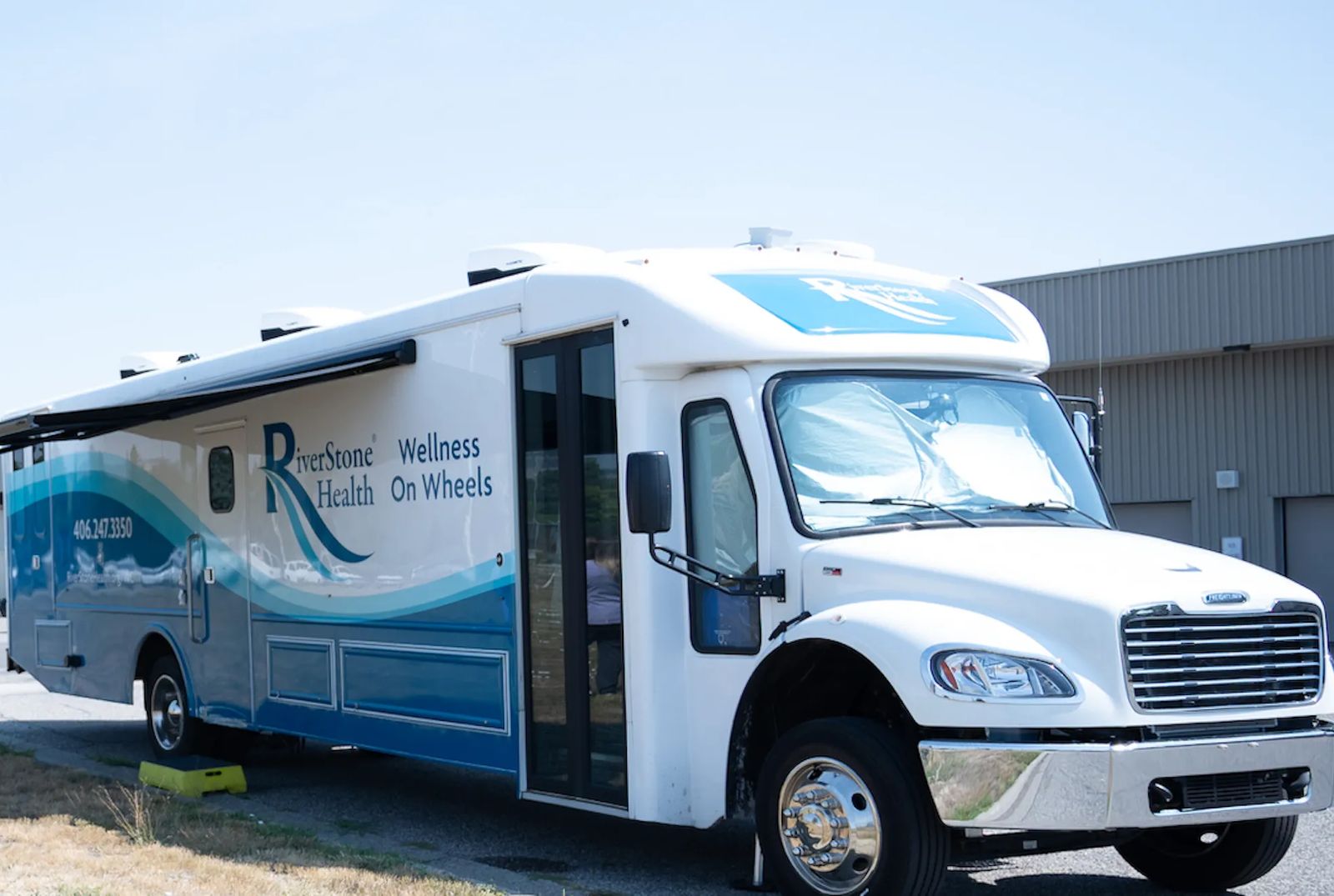
Sometimes, meeting patients where they are happens quite literally: by driving a 40-foot-long medical clinic on wheels into a community parking lot. Other times, it means removing barriers, building trust, and creating an environment where patients feel comfortable returning.
Across the region, RiverStone Health is taking healthcare beyond the walls of a traditional clinic. That approach takes several forms: aboard the Wellness on Wheels mobile unit as it travels across Yellowstone County, inside school-based clinics at Orchard Elementary, Medicine Crow Middle School, and Billings Senior High School, and at Healthcare for the Homeless, which has cared for people experiencing housing insecurity for more than 30 years.
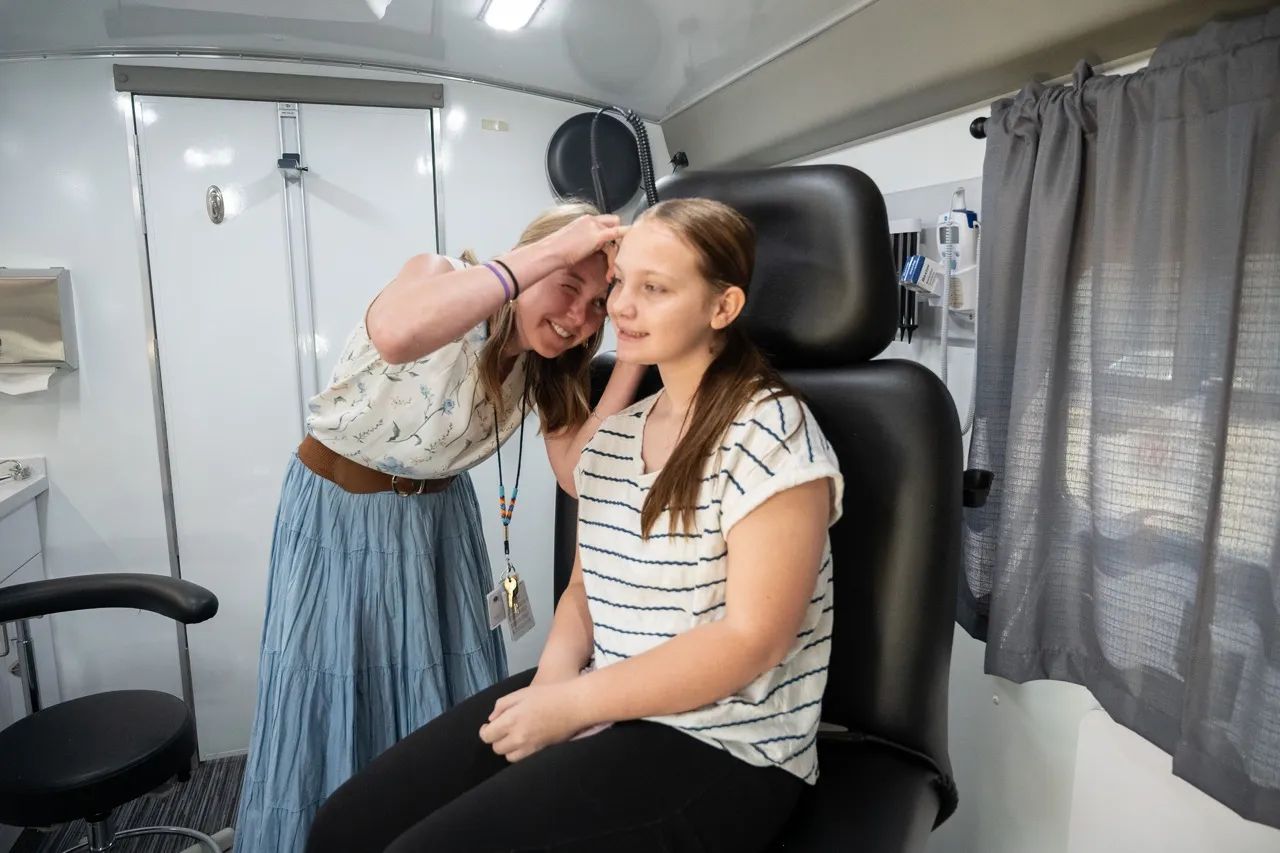
Perhaps the most visible example of this approach is Wellness on Wheels, which first hit the road in 2025. With a waiting area and two private exam rooms, the mobile clinic brings primary care directly to school and community parking lots, offering preventive care, women's health, minor procedures, wound care, hospital follow-ups, and an increasing amount of mental health care.
Family Nurse Practitioner Katie Keith provides care aboard Wellness on Wheels and in RiverStone's school-based clinics. And when the bus hits the road, she's behind the wheel, too.
"What makes the mobile model unique is that we are able to bring that care directly into the communities where people already live, work and go to school," she explains. "Transportation continues to be one of the biggest barriers to healthcare access in Montana, and that barrier can become even more significant when weather conditions are extreme."
But that's only part of the equation. "For many families, taking a child to a medical appointment can mean leaving work early, pulling a child out of school, driving across town, then spending additional time waiting in a traditional clinic," Katie says. "What may seem like a simple medical appointment can become an entire day of lost work, lost school and additional financial strain."
Beyond schools, Wellness on Wheels also partners with organizations across the community, including the Boys & Girls Club, YWCA, Tumbleweed, and HomeFront. "These partnerships allow us to reach people of all ages, not just children, but their parents, siblings and other community members," Katie adds.
But distance isn't the only thing that can stand between a patient and care. Previous medical experiences, mental health challenges or difficult circumstances can make walking into a traditional clinic intimidating in ways that have little to do with geography. It's a barrier the mobile clinic can help soften, Katie says.
"We can take the extra few minutes to build rapport, make a patient comfortable and meet them where they are," she says. Establishing trust, particularly during pediatric hospital follow-ups, can be just as important as the medical care itself.
The bus may function much like a traditional clinic, but Katie says the experience can feel decidedly different. "We have less physical space, but in some ways, we have more emotional space."
That need for emotional space is equally important across town, where April Morales, a registered nurse, works with patients through RiverStone's Healthcare for the Homeless (HCH) program. As the clinic's charge nurse, April brings more than 20 years of nursing experience to the role and knows firsthand that care often begins long before a diagnosis or treatment plan.
There may not be a typical day at the HCH clinic, but most mornings bring a mix of scheduled appointments and same-day care. Amid the unpredictability, April is seeing an encouraging trend where more patients are coming back. "They are coming back because they trust us," she says. "We have established that rapport and they feel safe with us."
Healthcare for the Homeless isn't exclusively for people sleeping on the street, either. Patients may be staying on a friend's couch or living in a hotel, vehicle, or camper. And even after securing permanent housing, April says some continue to receive care at HCH. "It's small, intimate and safe," she says. "They know what we do and they know we're here to help. They tell us they don't want to go anywhere else."
Trust doesn't always begin with an appointment, though. April says some patients first come with a friend, or stop by for something the clinic offers, like water or hygiene items. They keep their distance at first, then return, ask a few questions, and gradually get to know the care team. Sometimes, those relationships begin in remarkably small moments.
April remembers one patient who was reluctant to remove her coat for a blood pressure reading, trying to keep her arms hidden. Rather than focusing on what the woman didn't want her to see, April noticed something else. "Your eyes are beautiful," she told her. When the woman admitted she was self-conscious about her arms, April reassured her, "The first thing I see when I look at you are your beautiful eyes."
Weeks later, April spotted the woman at the nearby Montana Rescue Mission, where she had entered a residential recovery program. "She told me I was part of the reason she was there, because I showed her compassion and made her feel like a human."
For April, meeting patients where they are also means understanding they may not be ready to tackle everything at once in the first visit. "In that moment, in that visit, what can we get accomplished?" she asks herself. "You just don't know what they'll be ready for, and that's what you have to build off of. You really have to read the room."
That approach can also redefine what a successful day looks like. "I feel like every day is successful," she says. Sometimes, a win is someone following through with a referral or showing up for an appointment. "There's just little wins all day."
Those return visits can have an impact far beyond a single appointment, says Nicole Gilbert, RiverStone's community partnerships program manager, who oversees the community-based clinics. "Success is seeing patients come back," she says. "When patients return for care, we have the opportunity to move beyond simply treating a crisis or illness and begin focusing on prevention, overall health and long-term well-being."
"The ripple effect is a healthier, more connected community," Nicole says. "People are receiving care earlier, students are staying in school, parents are staying at work and community resources are being used more effectively."
Behind each of those ripple effects is a person whose access to care is shaped by more than personal choice, whether it's transportation, work, housing, or past experiences with the healthcare system itself.
For Katie, understanding those realities is at the heart of meeting patients where they are. "Meeting people where they are means recognizing those realities and building care systems that respond to them rather than asking people to overcome every barrier on their own."
Originally printed in the October 2026 issue of Simply Local Magazine
Never miss an issue, check out SLM's digital editions here!


