
When Pets Can’t Wait: How One Billings Veterinarian Is Filling a Gap in Emergency Pet Care
October 2026
Article by Maria Weidich
Photos by Nathan Satran
It was an ordinary Saturday afternoon last spring when Betsy Wandler let her dogs out into the family's fenced backyard. They had been inside for much of the day, and just a few minutes later, she heard a scratch at the back door.
That alone struck her as unusual. The dogs normally wanted to stay outside longer. When Betsy opened the door, she immediately noticed that Aurora, the family's two-year-old Toy Australian Shepherd, was holding her head at an odd angle. "Something looked really off," she recalls. "I went to pick her up and there was blood everywhere."
Betsy rushed Aurora to the kitchen sink and called for her daughter, Elizabeth, to bring towels and first aid dressings. As she tried to determine where the blood was coming from, she discovered wounds around Aurora's head and neck, and the bleeding was severe enough to soak through the lap sponges almost immediately.
The family's regular veterinarian was closed over the weekend, but Betsy remembered an ad she had seen just weeks earlier for Clarity Animal Hospital, a Billings veterinary hospital dedicated to weekend-only emergency care. "I remember telling them we were on our way with a dog that was bleeding out," she says of the phone call. "We live about 35 minutes away, so time was of the essence."
For Aurora's family, the emergency was frightening and completely unexpected. For Dr. Kayla Erickson, owner of Clarity Animal Hospital, this was the kind of situation she built her career around.
Bridging the Weekend Gap
With more than a decade of experience in emergency veterinary medicine, Dr. Erickson built Clarity Animal Hospital for moments just like this one, when pets like Aurora can't always wait until Monday. Open only from 7 a.m. Friday until 7 p.m. Monday, the clinic offers emergency and urgent care that can otherwise be hard to find.
Veterinary emergency medicine is there for life-or-death situations, much like an emergency department at a human hospital. Clarity also handles urgent care: a severe ear infection may not be life-threatening, Dr. Erickson explains, but a pet in pain shouldn't have to wait days for an appointment. "The goal of the clinic is really to be that liaison," she says.
General practice, by contrast, handles preventive care: vaccines, yearly bloodwork, spays, neuters, routine dental evaluations. "Their job is to keep your pet healthy," Dr. Erickson adds. "Where I come in is when your pet is unhealthy or has an acute decline. My job is to stabilize them, develop a treatment plan, and send them back home to their general practitioner to continue that care long term."
Not every situation ends with a pet going home. Dr. Erickson and her team also help families navigate end-of-life care, work she considers one of the most meaningful parts of her job. "If your veterinarian is closed for the weekend and it's time, we're here to help with that."
For Dr. Erickson, helping an animal die peacefully and with dignity is another form of care, one that includes supporting the people who love them most. Clarity also offers cremation services, so families can make those decisions in one place.
A Partner in Your Pet's Care
No matter the circumstances, treating the animal in front of her is only one part of emergency medicine, Dr. Erickson says. Involving the people who love them is just as critical.
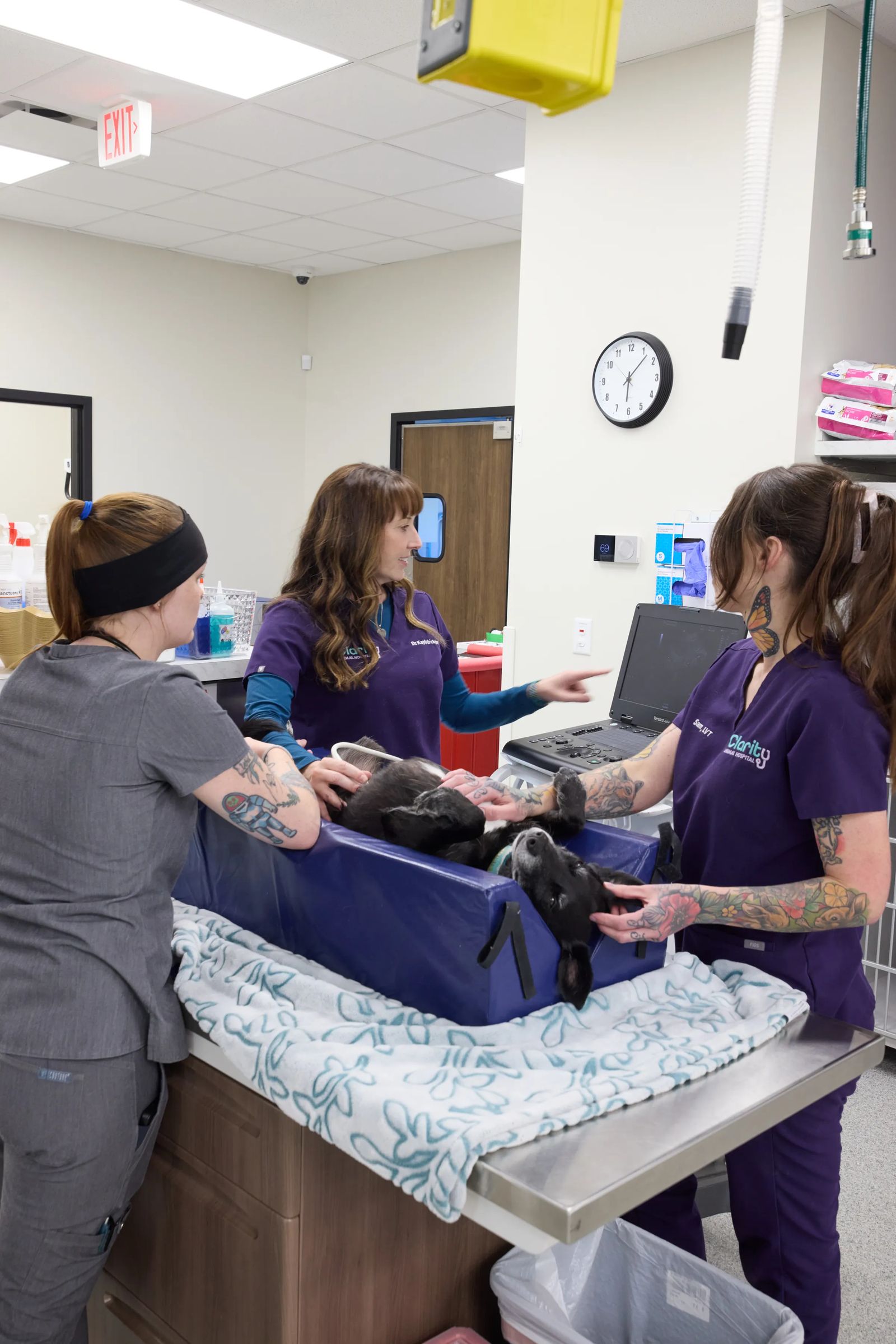
Born and raised in Billings, Dr. Erickson spent years working as a traveling emergency veterinarian before returning home. Along the way, she saw firsthand how beneficial it could be to involve owners in the diagnostic and treatment plan for their pets, especially in urgent situations. "Owners are more compliant because they see the work we do, why we recommend the treatments we do, and can see the improvements in real time."
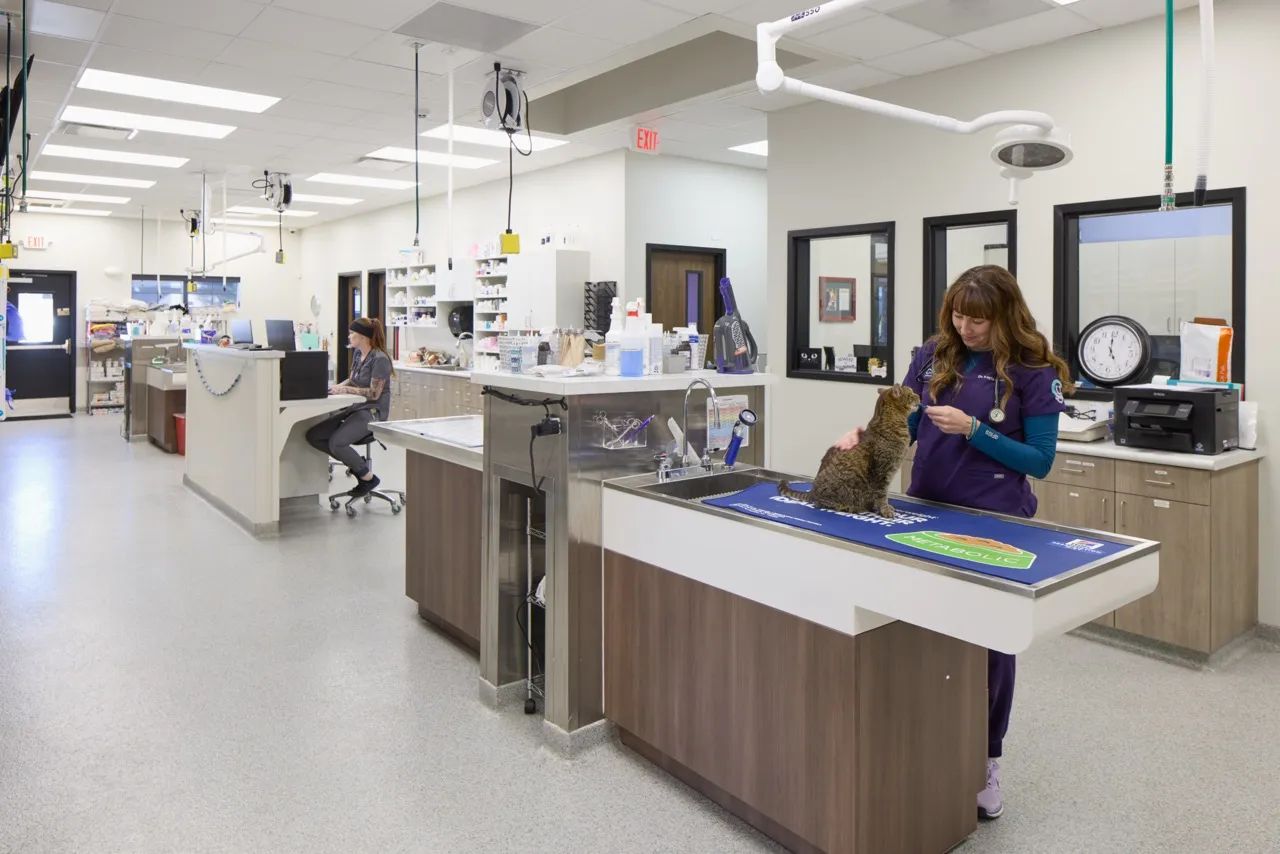
One way Clarity Animal Hospital puts that philosophy into practice is through its hybrid open concept, which allows space for the patient and owner to stay together as much as possible. This can improve both the outcome and the relationship pet owners have with their veterinarian, Dr. Erickson explains. "I've always felt that the client needs to be involved. Having them understand the process and why we recommend it is so important."
That understanding relies heavily on communication. Dr. Erickson and her team encourage clients to ask questions, rather than treating them as a challenge to their expertise. "Even if we think we're being clear, if they're asking questions, it means we need to clarify," she says. "That transparency is huge in veterinary medicine."
Compassion is just as critical. "This is a very emotionally and mentally exhausting industry. If you don't keep your compassion intact, the whole thing just becomes transactional."
Betsy and her family experienced that combination of transparency and compassion firsthand as the team worked to stabilize Aurora. "Dr. Erickson and her team were amazing every step of the way," she shares. "They were very empathetic and communication was unsurpassed."
It's a philosophy she relies on her entire team to carry out. Her veterinary technicians are just as invested in her clients, answering questions and treating every pet like it's their own. "It's rewarding to have this vision, but I can't carry it out by myself," Dr. Erickson says. "We have a great group who do such good work; I'm just so lucky."
Can an Emergency Be Prevented?
Not every pet emergency can be prevented, and Aurora's story is proof of that. But some can. "A lot of the recommendations your primary veterinarian makes can keep you out of the emergency clinic," Dr. Erickson advises. Routine preventive care is one place to start, and simply keeping pets fully vaccinated can protect them from potentially life-threatening diseases. "Parvo, distemper, rabies, all those diseases are preventable and are why vaccines exist."
Other precautions can be surprisingly simple: properly restraining pets when needed and being thoughtful about environments like dog parks, where Dr. Erickson says Clarity sees its share of injuries.
Preparation also means understanding the animal you're bringing into your family, including health concerns associated with its breed and anticipating any unique medical care it may need throughout its lifetime. "It's a privilege to own a pet," Dr. Erickson adds. "We have to make sure we're able to provide the environment and care they deserve. That means understanding the breed, vaccinating them, spaying or neutering them, and being prepared for their medical needs."
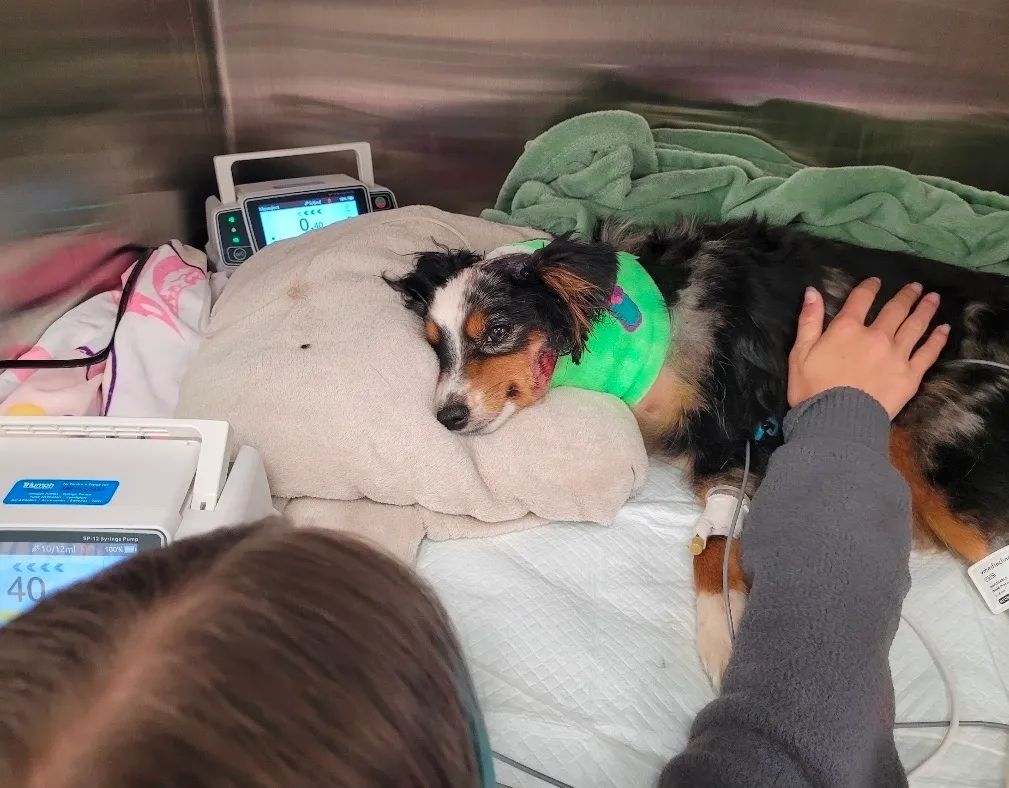
Photo courtesy of the Wandler family
A Tail-Wagging Ending
Back at Clarity Animal Hospital, Aurora's story was far from over. Her head trauma was significant, her neck was fractured, and she was too unstable for surgery. Betsy and her family eventually went home knowing the odds were not in their little dog's favor. No one saw what happened to Aurora in those few minutes outside, but based on the nature of her injuries and the birds of prey frequently seen around the family's property, Betsy believes Aurora was attacked by an eagle. "We left knowing that the chances of her survival were extremely slim," Betsy recalls.
Aurora had other plans. She began to stabilize overnight, and by late Sunday, Betsy received a video text from Clarity showing her gingerly making her way outside for a short bathroom break. By Monday, she was well enough to go home.
For several weeks, Aurora required twice-daily dressing changes, and it took about two months before Betsy said she was completely back to her old self. "But we've never looked back!" Betsy shares. "She is a great little dog and is very much loved."
For Dr. Erickson and her team, those are the moments in emergency medicine that never get old. "I love taking on a patient with a guarded prognosis, then days later sending them home, tail wagging," she says. "There really is nothing else that gives you that satisfaction."
Originally printed in the October 2026 issue of Simply Local Magazine
Never miss an issue, check out SLM's digital editions here!


