
A Different Path to Healing
July 2026
Article by Maria Weidich
Photos by Keely Zimmermann
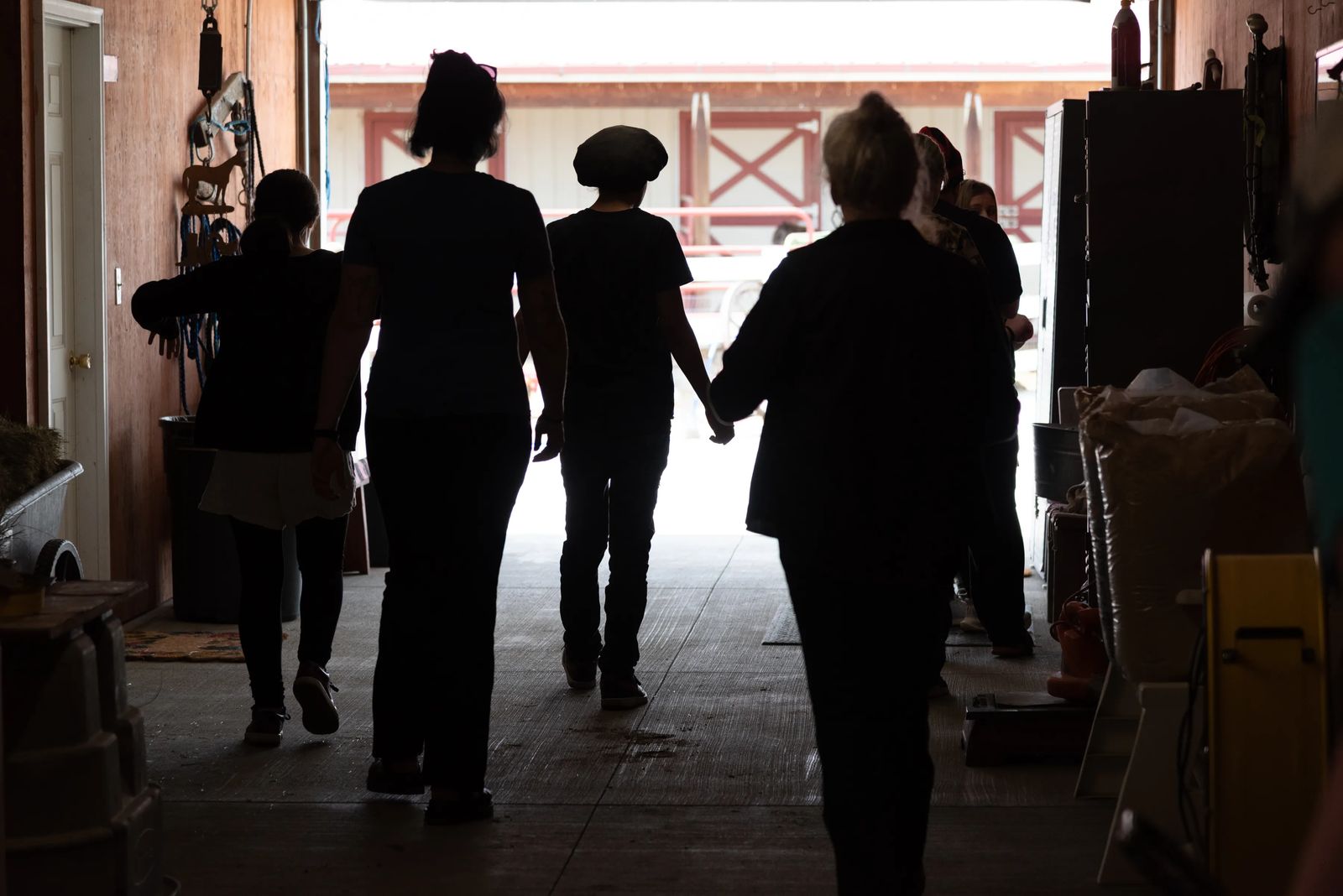
In a state with some of the nation's highest rates of childhood trauma, youth suicide, and strained mental health services, Chinook Horses, a Billings nonprofit, is taking therapy outside the traditional office and into the horse arena.
But the work at Chinook Horses isn't about riding. It's about relationships. "We're not going to teach you how to be a horseman," says Abigail Hornik, founder and executive director. "It's about relationships and forming a bond."
After leaving a career in advertising in New York City, Abigail followed a calling to Montana, guided by a lifelong belief in the healing power of horses. In 2016, she transitioned Chinook Horses into a nonprofit after realizing many of the people who could benefit most from equine-assisted services simply could not afford them.
"How could I not want this to be available to anybody?" she asks. "I don't feel like I'm capable of affecting change on a national or international level, but I surely can do it on a micro level in the community that I live in."
Today, Chinook Horses serves children, adults, and families through the Eagala model, an experiential treatment approach developed by the international nonprofit Equine Assisted Growth and Learning Association.
Abigail likens the model to a four-pointed star, with each point representing someone present in a session: the client, the herd, an equine specialist and a licensed professional such as a therapist, occupational therapist or special education teacher.
Sessions are entirely groundwork-based. No riding takes place. Instead, clients discover new ways of approaching challenges and goals through hands-on interaction with the herd.
Licensed clinical therapist Stephanie Melmer has been on Chinook's therapy team for five years. While the equine specialist manages the physical safety of the client, treatment team, and herd, Stephanie observes both client and horses for emotional and behavioral shifts.
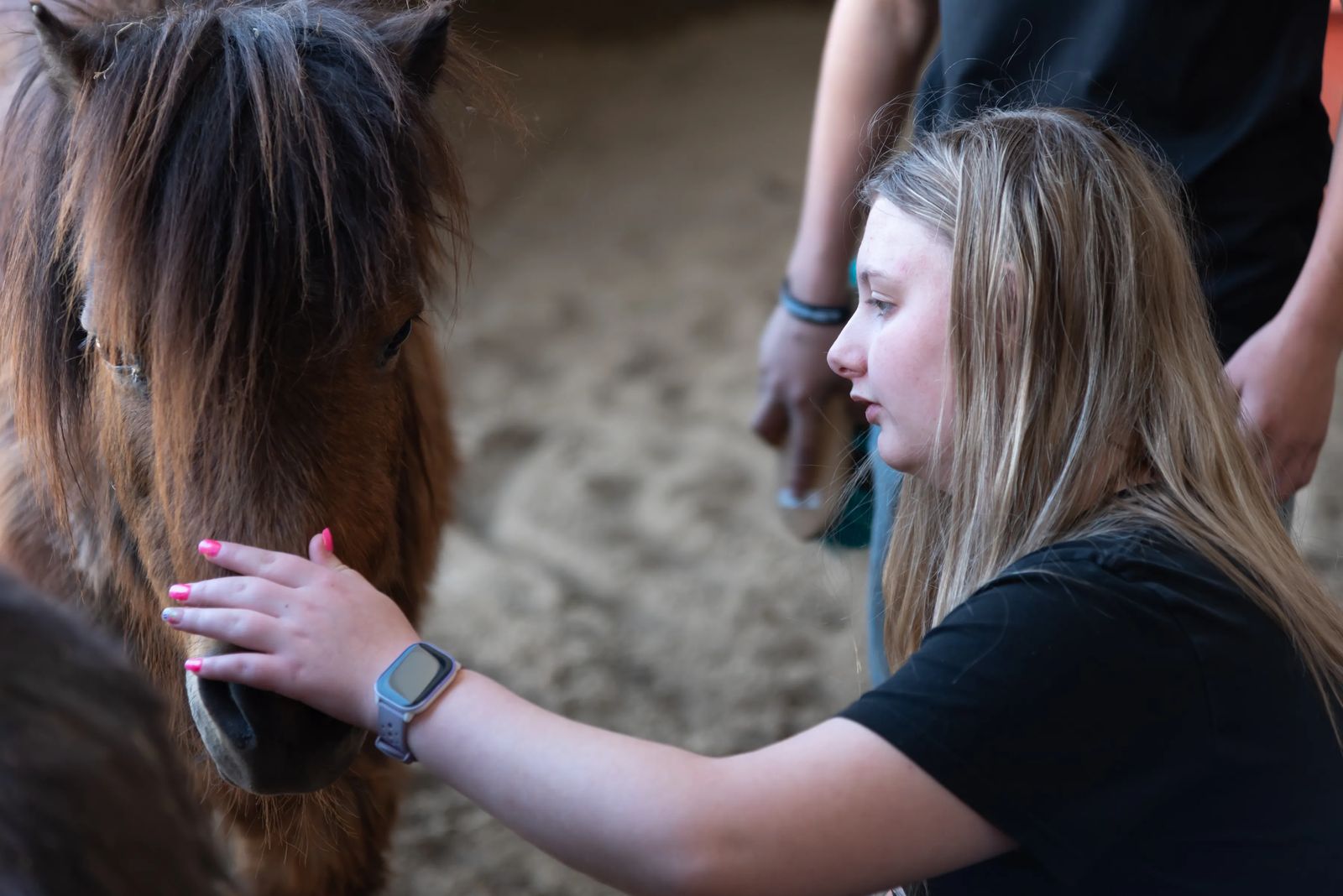
"These shifts let the mental health therapist know it may be time to check in with the client to explore what happened," she explains. A shift can take many forms, such as a change in a client's body language, something they say, or movement by the horses themselves. "The Eagala model is metaphoric work, using observations and nuance in the human and equine relationships to allow a client to self-direct in finding their own meaning in what is unfolding in the arena."
As Abigail puts it, "You can't be this experiential in an office with two chairs and four doors, it's just not experiential in nature." For many clients, especially children, moments of reflection happen more naturally in the arena than across a desk.
Stephanie often refers clients to equine therapy when traditional sessions plateau. "I have witnessed clients recognize their patterns more quickly doing equine therapy than they did doing talk therapy," she shares. "I've witnessed horses going from calm to agitated quickly, mirroring a client's agitation moments before I noticed. I've watched horses physically support clients with their bodies, and something happens for humans at that moment that allows us to soften our defenses and access ourselves more deeply."
"When they invite us to be a part of the herd, they attune to our breath and our heartbeats just as they do with each other," Stephanie says. "They become our mirrors."
That ability to mirror emotion is one reason horses make uniquely effective therapeutic partners. "There's so much space being held by the equine and human treatment team. Humans long for connection and to be seen; horses can do this for us," Stephanie says. Sharing space with horses can calm the nervous system when clients lean into that relationship. "The experiential process, slow pace, and equine relationships allow clients to sink into subconscious patterns, providing a path for change."
As prey animals, horses have evolved to constantly scan their environment for threats, making them exceptionally sensitive to body language, energy, and nonverbal cues. Much like someone who has experienced trauma, a horse's survival depends on its fight-or-flight response and ability to read emotional signals quickly. Long before a person speaks, Abigail explains, a horse is already responding.
That sensitivity can be especially powerful for individuals healing from trauma or working on emotional self-regulation. Free to move throughout the arena, horses provide immediate, nonjudgmental feedback.
"Our horses are not nose-to-tail trail horses; they all have very distinct personalities. Some are space invaders, and some don't like to be touched. This provides an opportunity for clients to learn boundaries," says Abigail.
Like humans, horses are deeply social, with distinct personalities and roles within a herd. "They could be stubborn, or they could be playful," Abigail says. "In other words, horses are a lot like us!" That individuality creates opportunities for connection, boundary-setting and emotional growth, without the pressure of a traditional therapy environment.
Their size and presence matter too. A horse cannot be controlled or overpowered, requiring clients to build trust rather than dominance. For many participants, learning to work alongside a 1,000-pound animal reflects how they approach relationships and challenges in their own lives.
For Stephanie, the impact is both personal and professional. "With each equine therapy process I have experienced for my own therapeutic work, I have learned something about myself and increased my self awareness. I know it works, but when I experience it myself, each time I have a little spark of awe as I remember how effective it is. I still have so much gratitude for doing this work."
While equine-assisted therapy is especially well-suited to children, it benefits anyone with a learning goal or challenge, regardless of age. And according to the team at Chinook Horses, the need in Montana is significant.
With Yellowstone County among the areas with the highest rates of children in state care and mental health providers increasingly stretched thin, Abigail sees Chinook Horses as a critical extension of local services.
It is as effective as it is costly, she acknowledges, adding that one of her goals is building the research base supporting equine-assisted therapy so insurance providers may eventually offer broader coverage.
"We are a critical extension of mental health services in our community," she says. "We get so many calls from caregivers saying they've tried everything, and nothing has worked. We're the last stop for so many of them. I think what we're doing is really different and thoughtful, and I'm very proud of what we've built."
Originally printed in the July 2026 issue of Simply Local Magazine
Never miss an issue, check out SLM's digital editions here!


