
Stay Sun Smart This Summer
June 2026
Article by Maria Weidich
Photos courtesy of Billings Dermatology & Aesthetics
Summer in Montana was made to be spent outdoors. Hiking, fishing, camping, and spending time in and on the water are what make living here so special. But all that sunshine, especially at higher elevations, comes with real risks, including irreversible skin damage and skin cancer.
According to Dr. Tanya Riddle, a triple board-certified dermatologist at Billings Dermatology & Aesthetics, skin cancer rates in Montana are significantly higher than the national average and our surrounding states. This is largely due to increased sun exposure from our outdoor lifestyle, both occupational and recreational. As such, every sunburn, even every tan, is a sign of skin damage. But the good news? Much of that damage, and many skin cancers, are preventable with simple sun-safety habits.
There’s No Such Thing as a “Healthy Tan”
One of the most common misconceptions Dr. Riddle addresses is the idea that a tan is harmless and can even be protective. “There is no such thing as a healthy tan,” she says. “A tan is your skin being burned, that’s all it is. A base tan is simply a base burn.”
Dr. Riddle likens tanning beds to smoking cigarettes. “Cigarettes don't usually give you immediate cancer; it comes down the road. The same goes for tanning,” she explains. “Even when the surface of the skin appears to recover, the damage doesn’t disappear. The layers underneath never forget how much sun you’ve had.”
Unfortunately, the tanning culture in Montana, whether outdoors or indoor tanning beds, hasn’t changed much over the years, Dr. Riddle professes. “I understand culturally where people want to belong, and they want to fit in. But I encourage clients to love the skin they’re in and to appreciate the skin God gave you.”
Sunscreen 101
When it comes to sun protection, sunscreen is essential, “but it only works when you use it,” Dr. Riddle smiles. “And most people underapply their sunscreen, and by the time they apply it, they’re getting much less coverage and protection than they think.”
“If you’re burning while using sunscreen, you either did not put enough on, or you did not reapply frequently enough throughout the day.” If applied sufficiently, Dr. Riddle advises that an average adult sitting poolside for several hours should go through an entire four-ounce bottle in a day.
One barrier to wearing sunscreen is finding one that works for you. “You deserve to be picky about that,” she adds. When looking for sunscreen, Dr. Riddle recommends broad-spectrum sunscreen, which protects the skin against both UVA (ages the skin) and UVB (burns the skin) spectrum light rays. “If we can block both of these rays, our chance of reducing cancer goes up considerably.”
For most individuals, Sun Protection Factor (SPF) 30 is sufficient. SPF 30 filters approximately 97% of UVB rays, but be advised that no sunscreen protects completely. And often, higher SPF values encourage a false sense of security, leading to less frequent reapplication. For ultimate effectiveness, sunscreen must be reapplied every two hours, and even more if sweating or swimming.
Beyond Sunscreen
While sunscreen is a cornerstone of protection, it’s not the only strategy. Perhaps even simpler is protecting the skin by covering up with tightly woven, loose fabrics. Sun shirts and wide-brimmed hats are among the easiest ways to avoid sun damage, Dr. Riddle says.
Lip protection is often forgotten, too. “The areas that burn the most commonly are also the areas that get the most frequent skin cancers,” she explains. “Our nose, brows, cheeks, and bottom lip all stick out the most, which is where sunlight lands and where the damage accumulates.” And don’t underestimate the importance of consistency. “Your skin never forgets,” she cautions. “Every minute you’re outside, your skin is banking like a bank account and remembering that.”
When Is It Safest to Be in the Sun?
Choosing when to spend time outside this summer is just as important as how you protect your skin. UV Rays are strongest between 10:00 AM and 4:00 PM, making those hours the highest risk for sun exposure. When possible, limiting time outdoors during this window can significantly reduce skin damage. “A high UV index means it’s the most problematic and it’s the most concerning,” Dr. Riddle explains.
Even outside peak hours, daily protection is still essential. “If you can see your hand outside, those are UV rays providing that light, and I recommend applying sunscreen.”
I’m Sunburned, Now What?
One question Dr. Riddle hears frequently is how to treat a sunburn. Her first recommendation: get out of the heat. “That often means skipping a day of activities outside, but when your skin is burned, more heat means more moisture is going to pull away from your skin.”
Her second recommendation is simple: moisturize. “Moisturizing a sunburn is the number one, two, and three things you should be doing,” she says. “Applying aloe vera gel, cool showers, and even ibuprofen for the pain can help. “The best thing you can do is moisturize, moisturize, moisturize…and drink plenty of water.”

What If I Already Have Sun Damage?
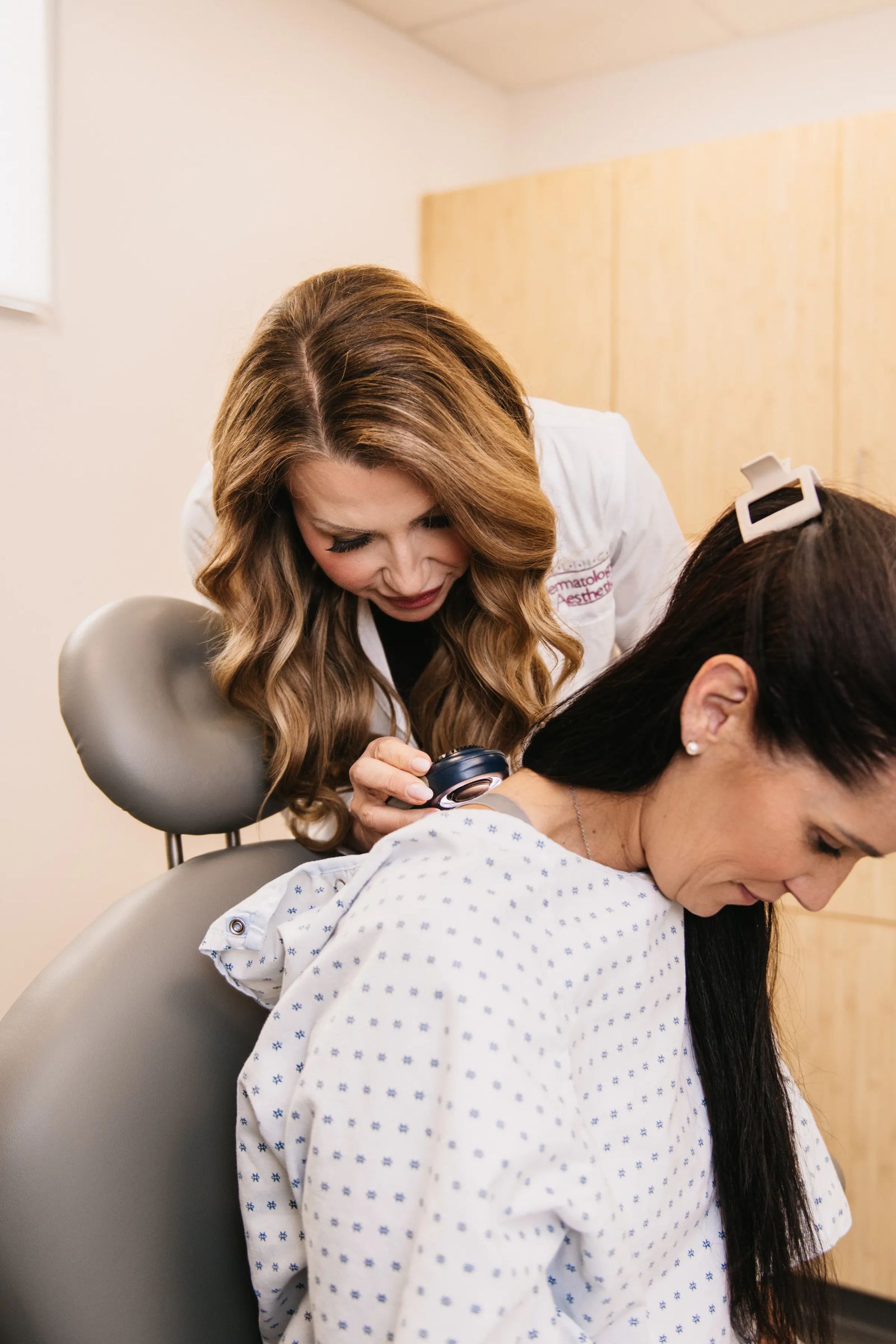
Even with the best intentions, sun damage can happen. The good news is that there are effective ways to reduce visible signs of damage, such as discoloration and uneven texture, on your skin. “We're visual diagnosticians, and we're often able to provide a rapid assessment and diagnosis of whether something is benign or more concerning,” she adds. The right approach depends on the extent of the damage, Dr. Riddle says, but in many cases, early intervention can make a noticeable difference.
Spotting Early Damage
If the skin hasn’t developed any pre-cancerous or concerning lesions, non-invasive, aesthetic interventions can help improve tone, texture, and overall appearance. Options include cosmetic lasers, prescription treatments, and medical-grade skin care products.
When Damage Starts to Build
As sun damage builds over time, some areas of the skin require medical treatment. These changes don’t necessarily require surgery, but they shouldn’t be ignored. Prescription-strength treatments like topical chemotherapy and Photo Dynamic Therapy can target these areas effectively, Dr. Riddle says. “These treatments are able to detect the part of the skin that is so sun-damaged that it is likely to develop cancers in the future, then purges the skin of the bad cells and incentivizes the skin to grow new, healthy cells.”
“These interventions can dramatically reduce the chance of developing skin cancer in your lifetime,” she adds, noting that effectiveness depends on sun exposure habits and ongoing protection.
When to Have It Checked
Some skin changes and damage can appear subtle. Basal cell carcinoma may look like a “weird pimple” or “an odd ingrown hair or irregular bug bite,” Dr. Riddle explains. If a spot doesn’t heal or sticks around for a month or more, it’s worth having it evaluated. “I always say, have somebody bless it before we go around carrying it and worrying about it.”
Skip the Trends, Stick to the Basics
With the rise of social media, there’s a new skin care trend every minute, jokes Dr. Riddle. “Skinfluencers have become so popular, and I'm hearing things that surprise me and don't surprise me at the same time. But there is very rarely a miracle cure, and how we treat our skin is reflective of years of how we’ve treated it in the past.”
Instead of chasing trends, she encourages patients to focus on simple, consistent habits that support long-term skin health. One of her top recommendations? Sleep. “I can’t take away the stresses of life, but I can encourage healthy sleep as a way to rest your body and rest your skin. It sounds so basic, but it really does make a difference.”
Hydration, both inside and out, is just as important, especially in our region’s dry climate. “Here in Montana, we have dry skin all the time, and our facial skin is thinner and dries out faster than the rest of our body.” She likens skin to a plump grape; the more we moisturize, the more we can avoid turning into raisins, she says.
Summertime in Montana is meant to be enjoyed outdoors, but enjoying it wisely makes all the difference. With simple, consistent habits like daily sunscreen use, wearing protective clothing, and paying attention to your skin, long-term damage can often be avoided. As Dr. Riddle reminds patients, “it’s so hard to undo chronic sun damage, and it’s so much easier to prevent it.” Her advice is simple: love the skin you’re in. And with the right care and attention, it’s possible to keep it healthy for many summers to come.
7 Expert Sun-Smart Tips
Simple, consistent habits can go a long way. Start with these expert-approved tips to protect your skin all summer long.
- Use Broad Spectrum SPF 30 or Higher Daily: Broad spectrum protects the skin against both UVA (aging) and UVB (burning) spectrum light rays. Reapply throughout the day, especially after swimming or sweating.
- Cover Up with Smart Apparel: Think long-sleeve sun shirts, wide-brim hats, and sunglasses. These offer easy and reliable protection without needing reapplication.
- Stay Out of the Sun at Peak Times: UV rays are most intense between 10:00 AM and 4:00 PM. Plan activities outside these hours or seek shade if possible.
- Skip the Tan: Indoors or outdoors, it damages skin and significantly raises your risk of skin cancer. Opt for self-tanning products or spray tans instead.
- Moisturize and Hydrate: Apply moisturizer after sun exposure and drink water throughout the day to keep your skin hydrated.
- Examine Your Skin Regularly: Conduct monthly self-checks for unusual moles, pimples, lesions, or spots, focusing on sun-exposed areas like the nose, ears, legs, and arms.
- Schedule a Yearly Skin Exam: Early detection is key, and an annual exam can help identify concerns before they worsen.
Know Your ABCDEs of Skin Cancer
The ABCDEs of skin cancer provide guidelines for recognizing suspicious moles, pimples, and spots that may later require professional evaluation. Understanding the ABCDEs can be a lifesaving tool in recognizing potential warning signs and seeking timely treatment.
A - Asymmetry One half of the spot or mole does not match the other half.
B - Border The edges are irregular, jagged, notched, or blurred rather than smooth.
C - Color The color is not uniform, featuring different shades of tan, brown, black, or patches of red, white, or blue.
D - Diameter The spot is typically larger than 6 millimeters (about the size of a pencil eraser), though it can be smaller.
E - Evolving The mole or spot is changing in size, shape, or color over time, or shows new symptoms like itching, tenderness, or bleeding.
Originally printed in the June 2026 issue of Simply Local Magazine
Never miss an issue, check out SLM's digital editions here!


