Photo by Lucy Call
Western, Refined
July 2026
Article by Jennifer Miller
Photos by Kilber & Kirch
There’s a reason Western and cabin-inspired interiors continue to resonate in Montana. They feel familiar, grounded, and connected to our environment. But, there’s a fine line between a home that feels timeless and one that feels overly themed.
For Jeremiah Young, creative director and principal of Kibler & Kirch, the difference often comes down to restraint. “For the most part, a well-designed Western home today looks like a little restraint has been shown,” he says. “It’s not overwrought and kitschy. It’s well edited.”
That doesn’t mean abandoning personality or avoiding Western influence altogether. In fact, Jeremiah believes the opposite. “People need a sense of place,” he says. “We all want to belong. It would be silly not to have our homes express who we are as Westerners living in this place.”
The key is doing it thoughtfully.
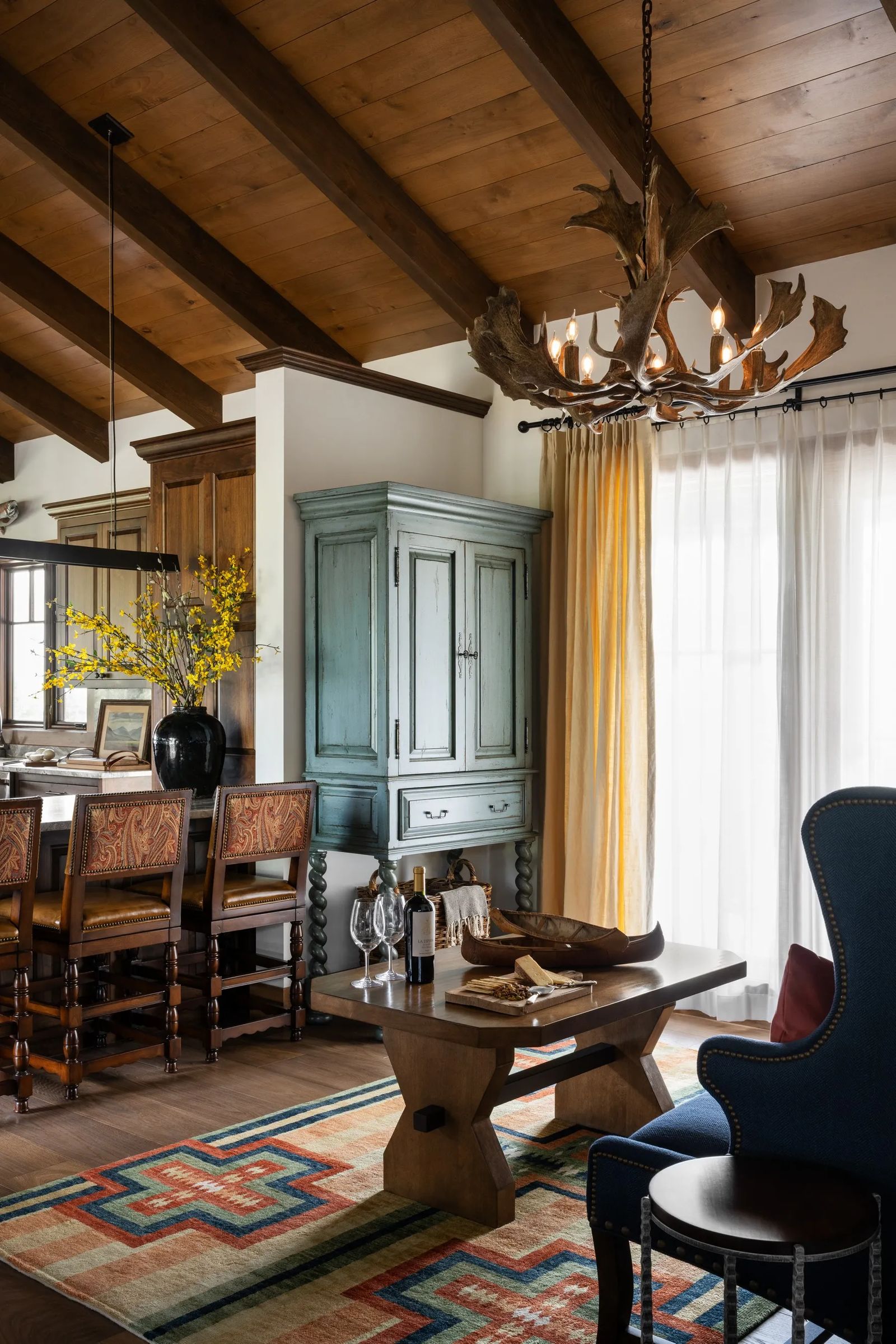
Photo by Lucy Call
Less, But Better
When people think of Western interiors, the temptation can be to lean hard into the theme. Antlers. Vintage signs. Heavy wood furniture. Cowboy motifs layered at every turn.
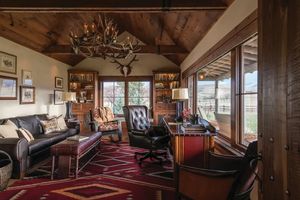
Jeremiah’s advice? Pull back. “The best thing is to have less, but better-chosen objects,” he says. That might mean investing in one incredible handmade rug instead of filling a room with trendy accessories. Or choosing a beautiful piece of pottery that stands alone rather than cluttering a shelf with smaller decorative pieces. A handcrafted saddle displayed as art? Why not?
The overall goal is intentionality, not abundance. Western style feels strongest when it is curated, not crowded.
Materials That Matter
Certain materials naturally lend themselves to this style, but even here, subtlety wins.
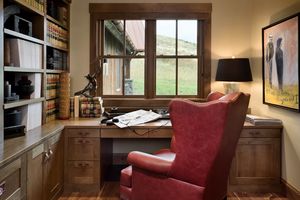
“You have to have leather in a Western interior,” Jeremiah says. That does not necessarily mean a large leather sectional dominating the room. Think smaller details instead: a leather-framed piece of art, a leather accent on a pillow, a worn brown leather chair, a hat hanging near the entry that feels collected rather than staged.
“A white room with some well-chosen brown leather items can nod to the West without being obvious or cliché,” he says. Natural wood, aged finishes, handmade pottery, woven textiles, and materials with visible craftsmanship all help create warmth and authenticity.
The common thread is character.
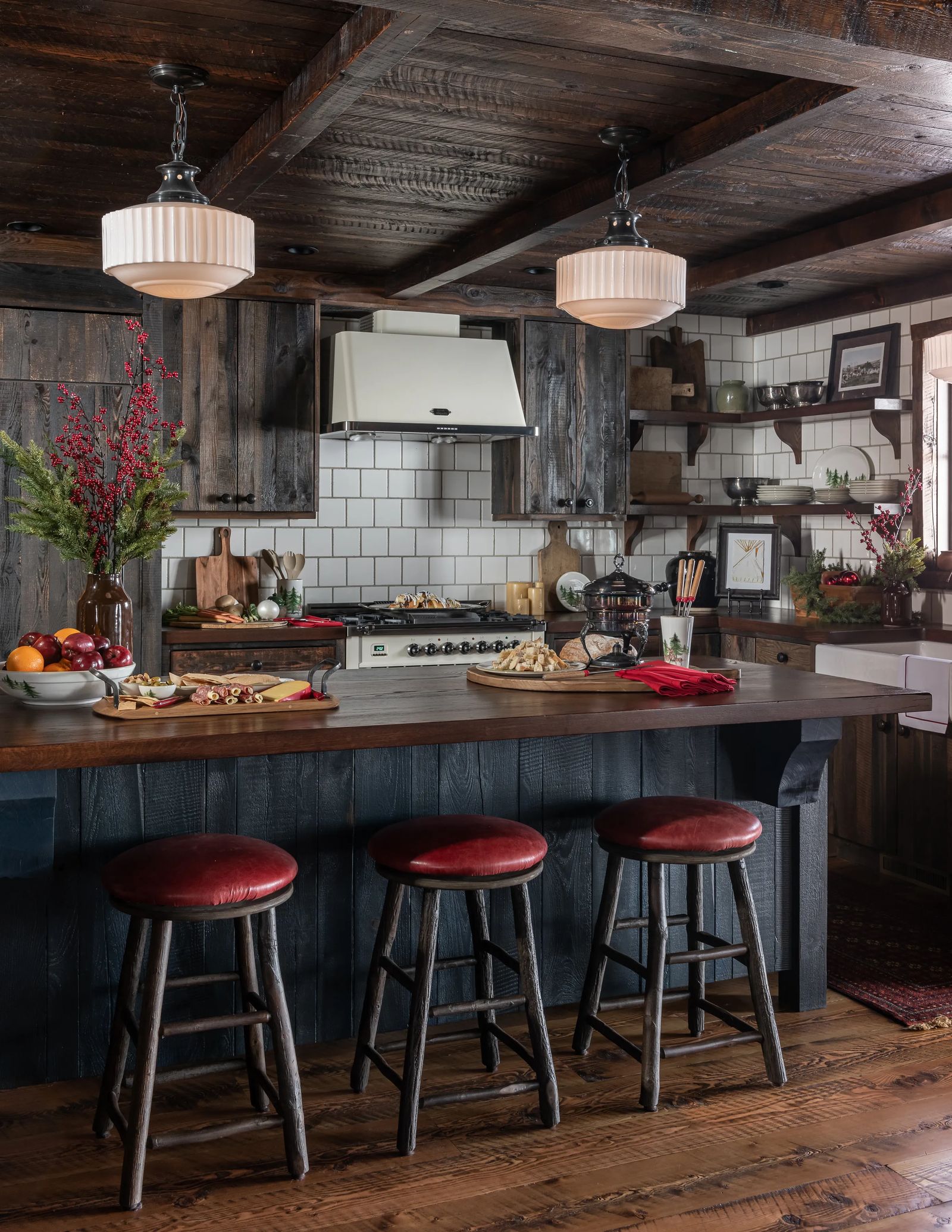
Photo by Audrey Hall
Why This Style Resonates Here
There is something particularly fitting about Western-inspired design in Montana. Unlike trends that feel imported or disconnected, this style reflects the region itself. Jeremiah sees that connection as part of what makes it meaningful.
“All of my work is at least subtly Western because of where we live, and we’re telling that story,” he says.
That perspective allows for flexibility. A homeowner with a more modern aesthetic can still incorporate Western influence. A traditional home can do the same. The style does not have to look one specific way to feel authentic.
The Enduring Appeal of Cabin Living
Cabin-inspired interiors tap into something slightly different, but equally powerful. For many people, the appeal is emotional. “There’s almost nothing more powerful than the thought of a place of one’s own where the changes of the world don’t apply,” Jeremiah says.
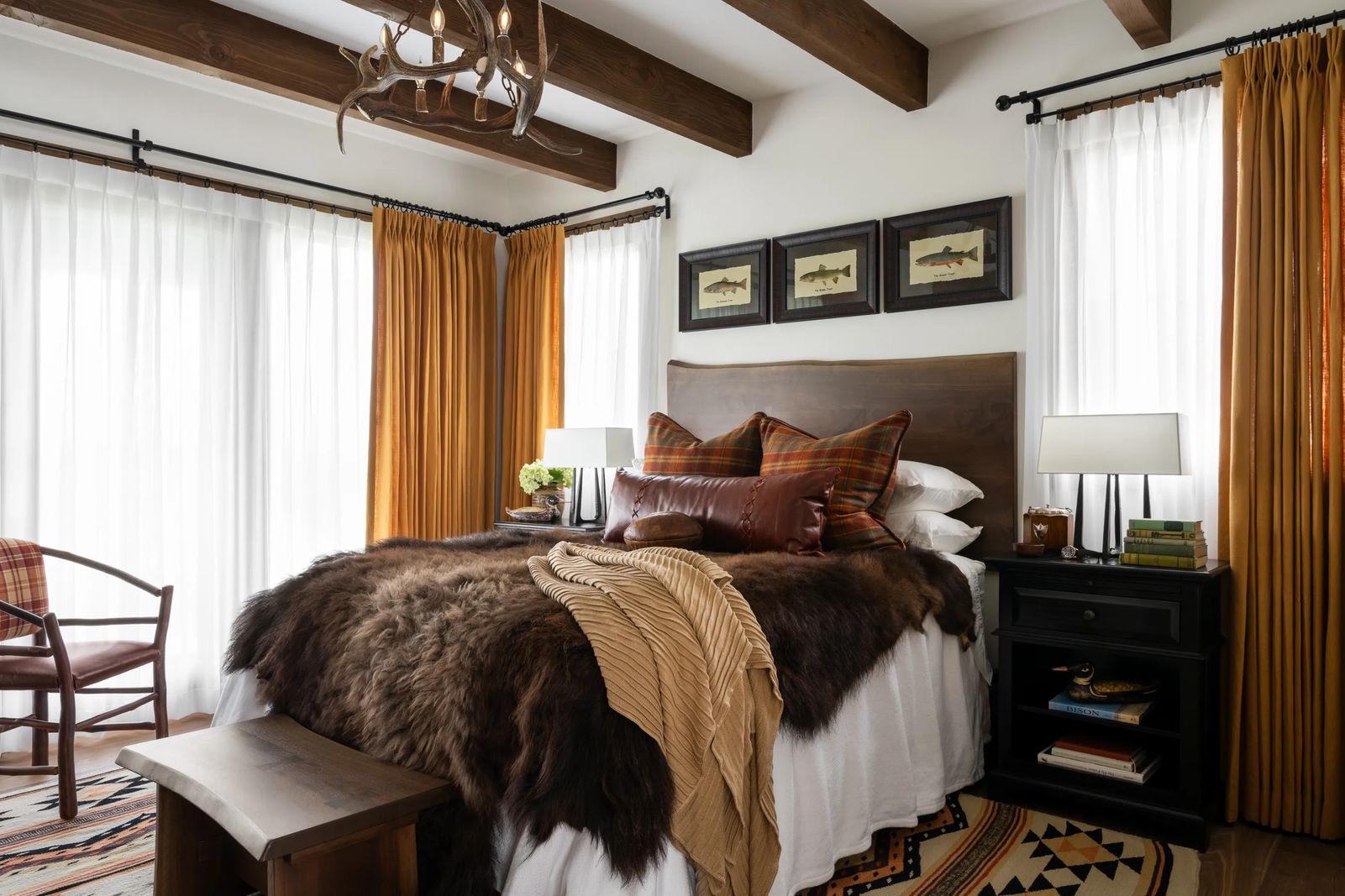
It is the idea of a timeless retreat. A space that feels warm, grounded, and unchanged in the best possible way. That does not mean your home needs exposed logs and oversized plaid to capture that feeling. Instead, the mood often comes through in quieter ways. Rich textures. Cozy layering. Warm woods. A sense of comfort that feels collected rather than overly styled. The goal is not to recreate a mountain lodge. It is to create a sense of refuge.
Where to Start
If your home could use a summer refresh with a more elevated Western feel, Jeremiah recommends starting with form rather than theme. Instead of asking what feels “Western,” ask what shapes, materials, and objects already fit the style of your home, then look for pieces with Western roots that complement them.
“Is it a rustic bench that still feels contemporary because of its simple lines?” he says. “Is it a black-and-white photograph that could live anywhere, but the way you frame it makes it feel Western?”
That approach keeps a space from feeling forced. Rather than overhauling an entire room, Jeremiah suggests layering in thoughtful pieces that feel collected and personal. A handmade rug. A striking piece of pottery. A leather accent that adds warmth and texture. Even a single vintage object with history can shift the tone of a space.
The goal is not to lean into obvious Western stereotypes. It is to thoughtfully incorporate elements that feel authentic to both your home and where you live. At its best, Western design is not about imitation. It is about telling the story of place in a way that feels personal, timeless, and entirely your own.
Originally printed in the July 2026 issue of Simply Local Magazine
Never miss an issue, check out SLM's digital editions here!