.jpg?fit=outside&w=900&h=600)
Photos courtsey of Western Heritage Center
Out with the Old, In with the New!
This time of year, the Western Heritage Center is making big changes. The doors are closed to the public for a very good reason: they are resetting every exhibit throughout the museum. The Western Heritage Center provides our community and visitors with frequently changing exhibits to make each experience new and exciting.
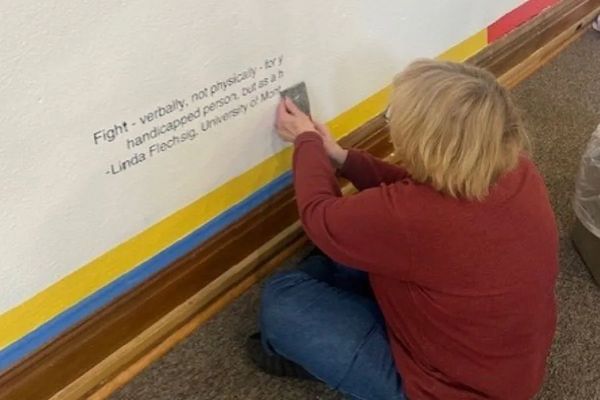
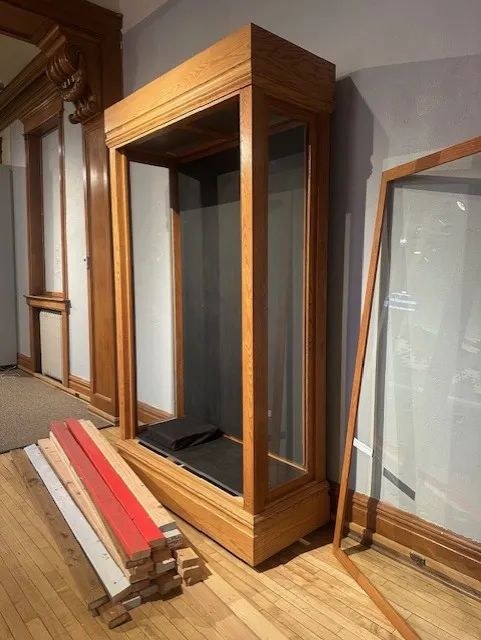
The work began months ago, with extensive research and planning. From there, the dedicated staff and volunteers take on the big task of dismantling cases, returning loans, and repainting walls. They also use this time to make necessary repairs and focus on preservation projects within the historic building. The most rewarding part comes as new text panels and photographs go to print; artifacts are carefully selected, and each exhibit begins to take shape. It is a quick turnaround, and the team is always excited to reopen their doors and once again share captivating and compelling stories of the past with our guests.
They would like to invite the entire community to visit the Western Heritage Center once it reopens on Tuesday, March 17th. Once the doors are open again, visitors will be welcomed into five brand-new exhibit spaces.
2026 Exhibition Descriptions
Having a Beer in Billings
From its earliest days, Billings has been a city shaped by transportation, commerce, and community gatherings, and nowhere was this more evident than in its breweries and saloons. Having a Beer in Billings explores the role of beer in the city’s social and economic life. Through artifacts, photographs, and stories, visitors will discover how beer helped bring people together, fuel early business ventures, and leave a lasting mark on Billings’ culture. Raise a glass to history and step into the city’s spirited past.
Hope in Hard Times: Arthur Rothstein & Marion Post Wolcott in Eastern Montana
Between 1930 and 1941, Montana experienced one of the worst droughts in modern history. Coupled with America’s Great Depression, Montanans struggled to scratch a living. Throughout the 1930s, the Farm Securities Administration sent photographers, Arthur Rothstein and Marion Post Wolcott to document the realities, grit, and hope of the times. Their images form one of the most vivid and lasting visual records of New Deal Montana.
Prisoner of War: Ben Steele’s Personal Chronicle from Bataan to Hiroshima
Ben Steele was an American soldier in the Philippines at the beginning of World War II. When American forces on the Bataan Peninsula surrendered in 1942, Steele was among tens of thousands of American and Filipino troops forced onto the Bataan Death March. He spent the next three and a half years as a POW in several labor camps, including the infamous Tayabas Road Detail. During his captivity, he survived beriberi, dysentery, pneumonia, blood poisoning, malaria, and the death ships. When the war ended, he was working in a Japanese coal mine less than 80 miles from Hiroshima.
Like many survivors, Steele struggled with memories of his captivity. As he came to terms with what he had seen and experienced, he began drawing from memory. Over the next decades, Steele became a critically acclaimed artist of the American West, yet the Bataan Death March and the labor camps were never far from his mind. Steele passed away at the age of 98 on September 25, 2016.
Delegations and Diplomacy: The Apsáalooke in Washington, D.C.
In the late 1800s, Apsáalooke leaders traveled to Washington, D.C., to resist land loss and defend their homelands. Their experiences were recorded in ledger drawings with graphite and colored pencil sketches that captured trains, circuses, and Capitol buildings, through moments of negotiation. Preserved in the Barstow Collection, these rare works offer an unparalleled Apsáalooke perspective on diplomacy amid immense pressure from U.S. policies. This exhibition places the ledger drawings at the center, revealing them as both art and testimony to Apsáalooke resilience, leadership, and sovereignty.
Coming in July:
At Home in Yellowstone: The Native Presence in Yellowstone National Park
For thousands of years before Yellowstone became a national park, it was a place where people hunted, fished, gathered plants, quarried obsidian, and used the thermal waters for religious and medicinal purposes. Today, 27 indigenous tribes have ties to the area and to resources now found within Yellowstone National Park. This exhibition explores the historical stories and contemporary connections that continue to make Yellowstone home.
Let Wonderland Tell Its Story: William Henry Jackson’s Albertypes
This exhibition presents a rare collection of vintage 1871 William Henry Jackson albertypes, the first depictions of Yellowstone National Park. Jackson was privileged to be appointed the official photographer for Ferdinand Hayden’s epic government-sponsored exploration of the Yellowstone Plateau during the summer of 1871. These images formed the first large assemblage of photographs taken in Yellowstone, and were used to produce multiple albertype copies to be used in the congressional effort to establish Yellowstone as our first national park.
Man’s Best Friend: Historic Photographs of Dogs
We are deeply devoted to our dogs. When introducing dog ordinances, county offices received a significant amount of public feedback. Whether adog tax is in place, we care enough about our companions to ensure they enjoy a long, happy life. This bond has remained unchanged since the earliest days of domesticating canines.
In this photo exhibition, loyalty and unconditional love are depicted throughout Montana. In this museum collection, photographs of our furry companions have increased. From family portraits to property photographs, these candid shots reveal the enduring bond between people and their pets.
Stay Updated
Looking for new exhibits? Check out their Facebook page for updates: Western Heritage Center on Facebook
The Western Heritage Center is located at 2822 Montana Avenue, Billings, Montana 59101