
STEAMing along in Red Lodge
July 2026
Article by Stephanie Hobby
Photos courtesy of Hero's STEAM Center
Throughout the week, the Roosevelt Center in Red Lodge is a lively place. It's home to the Hero's STEAM Center (Science, Technology, Engineering, Art, and Math), where local students and adults can explore everything from computer science and biology to sewing. The center takes its name from Hero of Alexandria, the Greek-Egyptian mathematician and engineer known for inventing an early steam-powered device. Coordinator Theresa Whistler jokes that they cover "everything but religion and politics."
Eight years in, the Hero's STEAM Center has been capturing imaginations and setting students on a path toward innovation, and it all started with a dream. Ken Whistler, a retired electrical engineer who had spent 20 years with Verizon Wireless, wanted to share his equipment with the Red Lodge community through a maker space, where people could come and tinker with his collection of tools, including a 3D printer and a laser engraver.
When the Red Lodge Area Community Foundation learned of Ken's interest, they connected him with the Boys and Girls Club, where he launched a robotics program with middle school students. There, he crossed paths with Stephen Wilcox, a local software engineer who would go on to become co-founder of the Hero's STEAM Center.
Hauling gear around town each week was a logistical and physical challenge. With help from the Foundation, they secured a permanent home at the Roosevelt Center. The grand opening on Feb. 7, 2019, marked the realization of Ken's dream.
"He loved technology, and I think what inspired him most was the wonder of it all, and wanting to share that with children to inspire them. His father was an engineer at GE, and Ken tinkered all the time, trying to impress him. His mother was a teacher, so I think he really saw the best of both worlds and wanted to share his experiences with youth," says Theresa Whistler, Ken's wife and program coordinator for Hero's.
Tragically, less than a year after the grand opening, Ken passed away, leaving behind a legacy of curiosity and a passion for discovery among his students and fellow community members.
Theresa, who had worked in geographic information systems for Verizon Wireless and was not yet retired, felt compelled to keep the program going. With nearly 15 years of experience as a Girl Scout leader, she began writing grants and continued hosting the Boys and Girls Club.
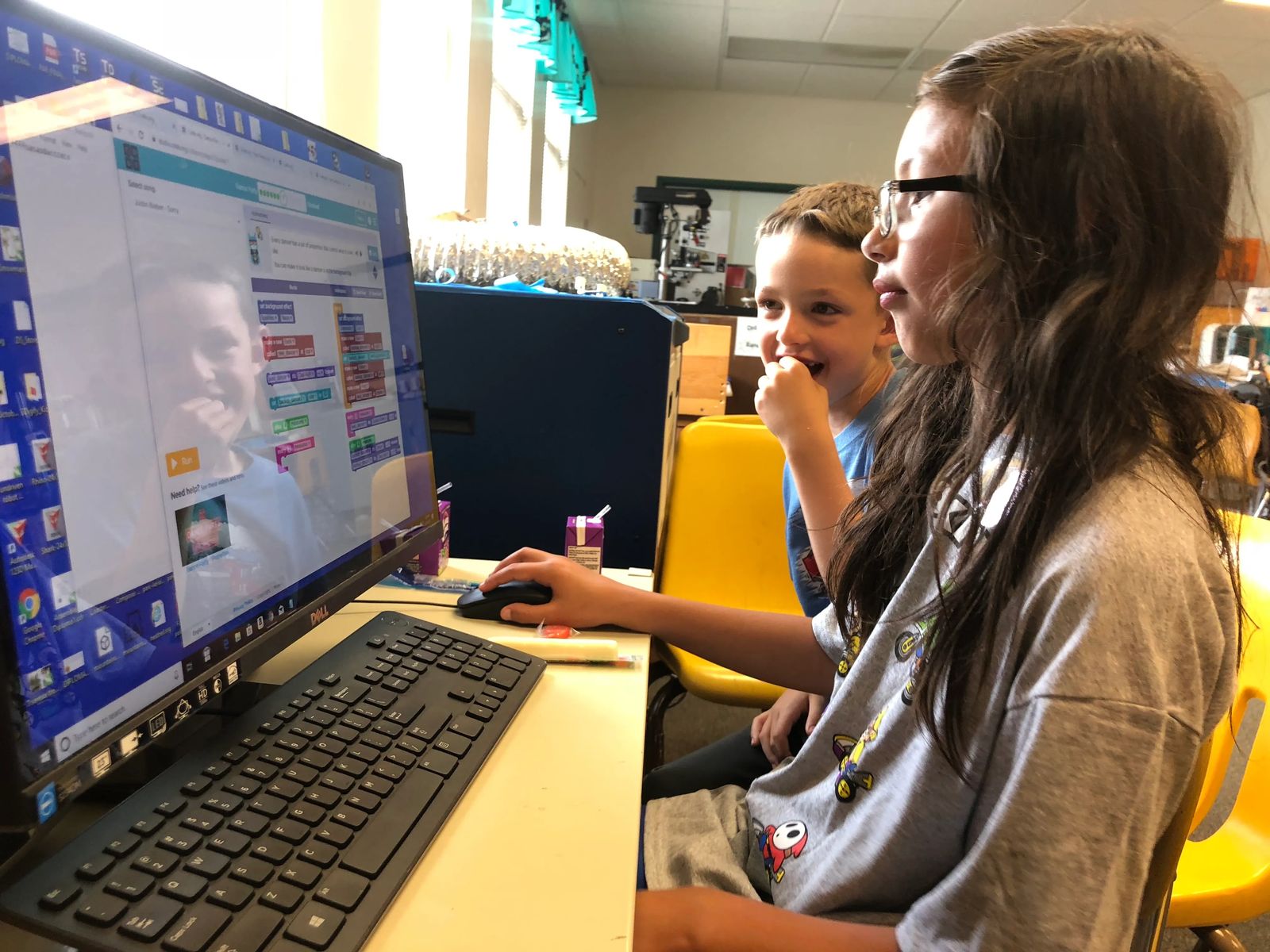
As an engineer herself, Theresa was determined to encourage girls in the sciences. Around the time they were relaunching Hero's after Ken's passing, they added a Code Girls United chapter to the program. The Kalispell-based coding program for girls was a natural fit for Hero's mission and is now celebrating its fifth year in Red Lodge. Their team of 10 girls, from fourth through seventh grade, routinely takes home honors at coding competitions.
Wilcox, the Red Lodge Code Girls United coach, started programming computers as a first grader in the 1980s, long before most people had access to one, and grew up playing with emerging technology. When he reached college to study computer science, he noticed a sharp divide between students who had grown up using computers and those newer to the field, and many of the latter eventually left the programs.
“I realized it was pretty important to start this as a kid before your brain sort of rewires itself in your teenage years,” Wilcox said. Code Girls United also encourages more women to enter computer science fields. He says there were very few women in his courses in the 1990s, and numbers have actually declined since then, so his work is helping to shape the future of computer science.
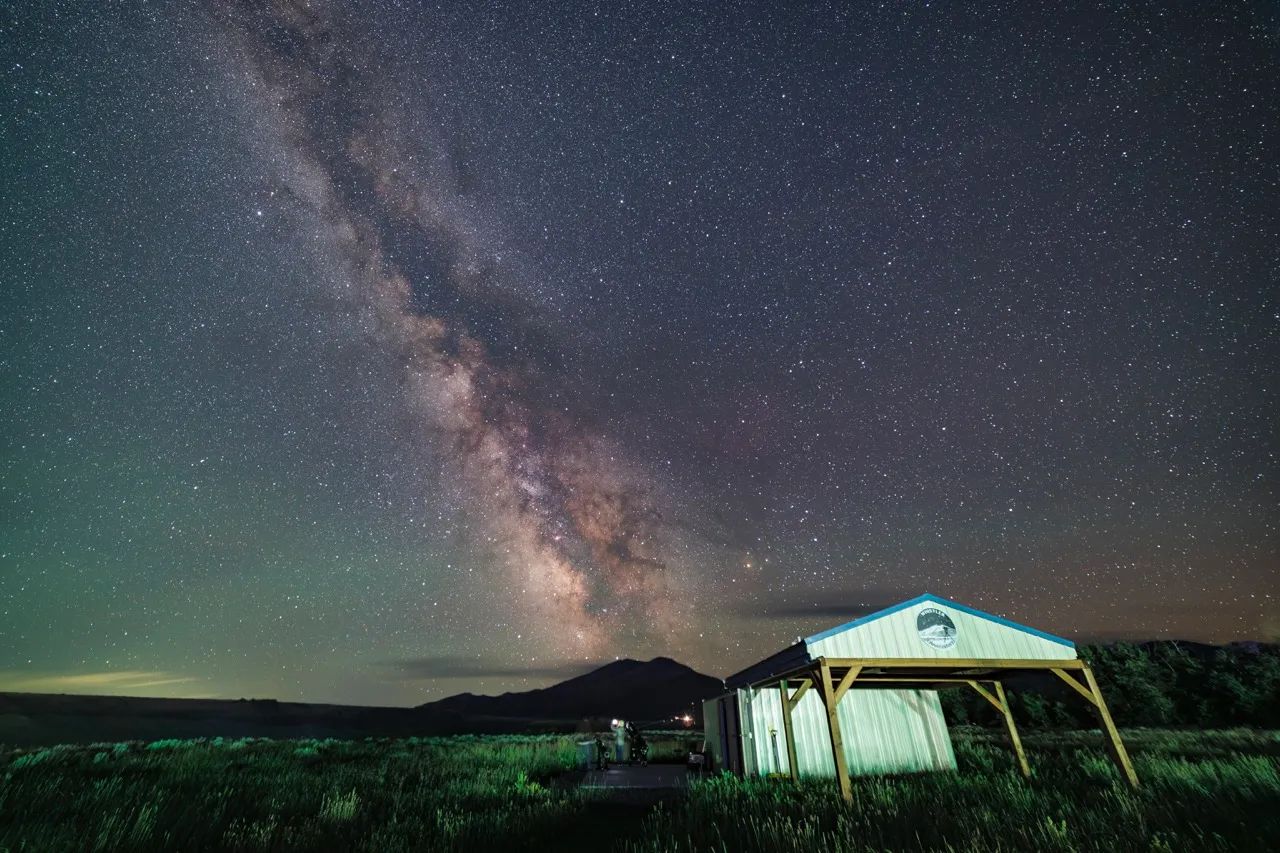
The third component of the center is the Whistler Observatory, home to some of the most powerful publicly available telescopes in the area. Around the time Hero's was founded, community members were working to protect Red Lodge's access to dark skies. Theresa offered the Hero's classroom as a meeting space and was soon presented with a pivotal opportunity: a Billings resident had a telescope to donate but nowhere to put it.
Air Force veteran and meteorologist Jeremy Battles had been enjoying astrophotography and was drawn to the effort to protect Red Lodge's night skies, eventually becoming instrumental in founding and operating the Whistler Observatory. Today, it is open year-round every Friday night, generally starting half an hour after sunset when the skies are clear, and hosts special events such as the Perseid Meteor Shower in August. In spring, the focus turns to galaxies; up to a dozen are visible at once. In winter, nebulae take center stage, the glowing clouds of gas and dust where new stars form. Throughout the year, different planets come into view, and occasionally the team trains the telescopes on a passing comet.
"It's been very, very well received and supported," Battles says, noting that visitors sometimes bring their own telescopes to troubleshoot or learn how to operate them. "It's genuinely just personally inspiring. Some people have never seen the rings of Saturn or looked through a telescope at all. Just popularizing astronomy is something I think is important and enjoyable for me personally. The more people who are looking up at night, the better, both in terms of people thinking about turning their lights off for light pollution purposes, but just for the natural resource aspect of it. We've got mountains, trails, rivers, and such, and I kind of look at the night sky as in that same category."
For Theresa, it's rewarding to see how far they've come in such a short time. "It's been such an opportunity and a gift, and something you don't walk away from," she says, laughing as she admits that running operations is essentially a full-time job. "It's just such a wonderful gift to be able to work there and donate your time and meet everyone. It's just wonderful."
Originally printed in the July 2026 issue of Simply Local Magazine
Never miss an issue, check out SLM's digital editions here!


