
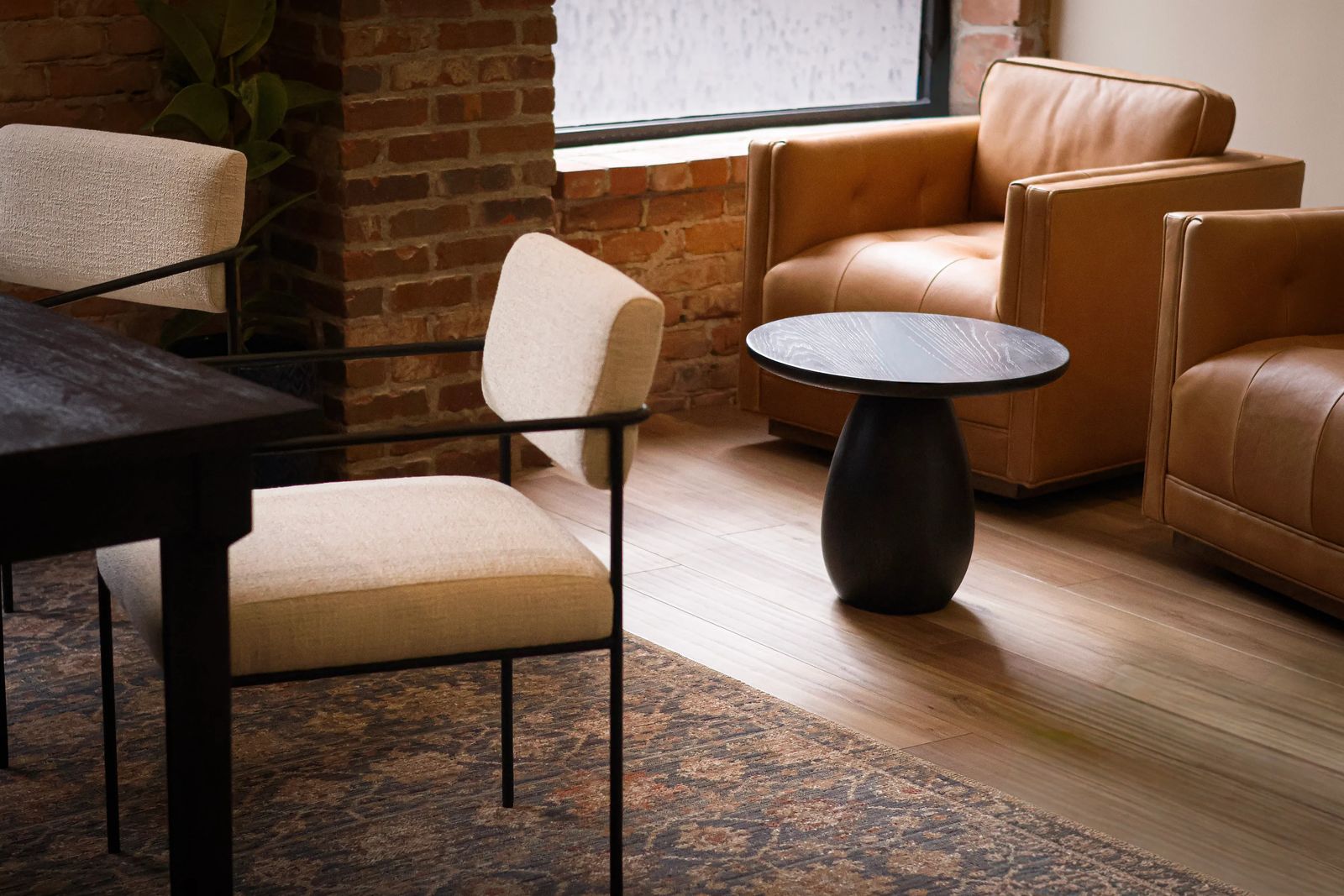
A Room Worth Working In
November 2026
Article by Jennifer Miller
Photos courtesy of Davidson Home Furnishings & Designs
A well-designed office has a job to do. It needs to support the way you work, provide adequate storage, and make long hours at a desk more comfortable. But function doesn't have to come at the expense of personality.
For Tiff Davidson-Blades of Billings-Based Davidson Home Furnishings & Design, some of the best office spaces are the ones that feel less like an "office" and more like an intentional, inviting room. "It needs to be an environment you want to spend time in," she says. That shift in perspective can change nearly every decision that follows.
Start With How You Work
Before choosing paint colors or accessories, consider how you'll actually use the space. For Davidson-Blades, the right desk is one of the most important starting points. With multiple monitors now common, having enough surface area for technology and everyday work is essential. But bigger doesn't have to mean heavier. Rather than a traditional executive desk, she favors a more open, table-style design that provides plenty of workspace without visually weighing down the room.
Storage is equally important, whether it comes in the form of built-in cabinetry or freestanding furniture. The goal is to give everything a place while choosing pieces that still contribute to the overall design.
The same practical approach applies to seating. Someone spending eight hours a day at a computer will have different needs than someone who uses their desk for shorter stretches throughout the day. If you spend significant time seated, Davidson-Blades recommends prioritizing a chair that is both highly functional and truly comfortable. If your desk time is more limited, there's room to have a little fun. Choose an unexpected silhouette, introduce color, or select something that feels more like a beautiful piece of furniture than a traditional office chair.
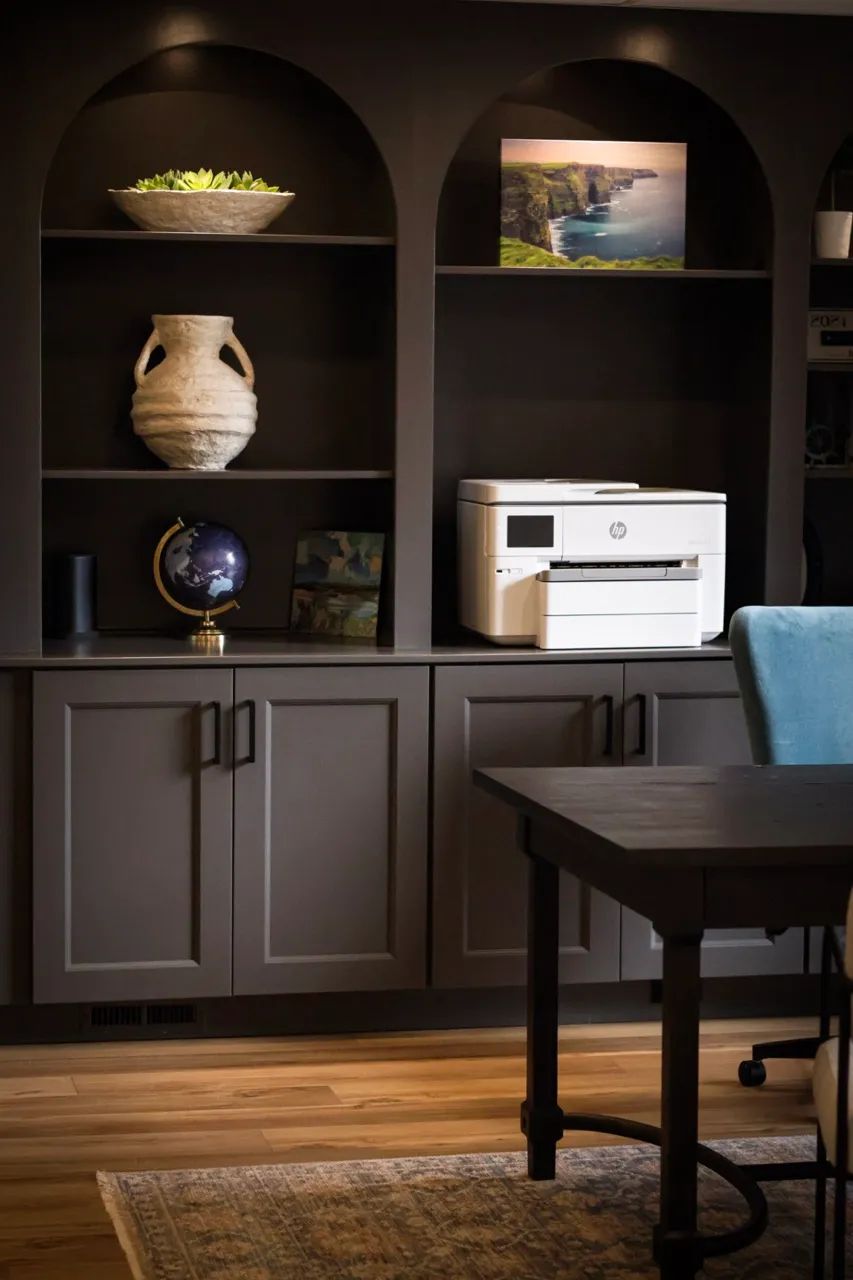
Make It Personal
Once the functional pieces are in place, resist the urge to stop there. Davidson-Blades encourages creating workspaces that feel warm and inviting rather than strictly utilitarian. Think beyond the furniture and consider how the room feels.
Natural light and fresh air from a well-placed window can create a healthier, more positive environment. Layered lighting, an area rug, greenery, and meaningful accessories can soften the space, while family photos and personal objects bring in something no catalog or inspiration image can replicate.
It's part of a larger shift Davidson-Blades is happy to see in interior design: a return to personality. "Individuality, color, and warmth," she says of the trends she's currently embracing. Unless cool neutrals such as gray, black, and white are already part of someone's personal aesthetic, she suggests richer colors, added texture, and warmer wood tones.
More importantly, she encourages people to spend time figuring out what they actually like. "We live in an age of re-creating things we see on the internet," Davidson-Blades says. "With the new emphasis on individuality in our homes, it is important to take the time to develop a look that is truly a reflection of you."
Davidson-Blades' advice applies naturally to a home office, but the principle reaches beyond it. A workspace, whether it's a dedicated room at home or an office you commute to each morning, should support the way you work while still feeling distinctly yours.
Give yourself the spacious desk. Choose the chair that fits the way you use it. Bring in texture, greenery, photos, and objects that make the space feel personal. Take advantage of natural light whenever you can. An office needs to work hard, but that doesn't mean it has to look like work.
Originally printed in the November 2026 issue of Simply Local Magazine
Never miss an issue, check out SLM's digital editions here!


