
Room for One More Chair
September 2026
Article by Hannah Olson
Photos by Arianna Skoog
Before Brooke Murphy ever learned to play Mahjong, she had to learn what it felt like when a season of life quietly comes to an end. For more than two decades, life was measured in practices, tournaments, carpools, and games. Like so many parents, she found community almost by accident, standing in bleachers with the same families week after week, celebrating victories, surviving losses, and building friendships somewhere between concession stands and late-night drives home. Then, one by one, her three children left for college. The schedules disappeared. The weekends grew quieter. One afternoon, after dropping off her youngest, Brooke walked into her house, looked around at the silence, and suddenly understood that life had shifted.
"My freshman left for school this last fall and I was like, 'What am I going to do now?'" she recalls. "I kind of burst into tears when I walked into an empty house for the first time."
It's a feeling that arrives for many of us, whether our children leave home, we retire, or we simply wake up one day and notice the routines that once introduced us to new people have quietly faded away. The change is rarely dramatic. It happens gradually, until one ordinary afternoon reminds us that a season has ended.
At another home in Billings, Randi Ellis was arriving at much the same realization. As a physician assistant, wife, and mother, life had always been full. But as her children grew older, she and her husband found themselves searching for something they hadn't needed in years. They weren't looking for another obligation or another item on the calendar. They were looking for a reason to gather with other people again, to laugh, to learn something new, and to reconnect with a part of themselves that had quietly been set aside while raising a family.
"I needed something different than work," Randi says. "Something that involved getting out of my comfort zone and just interacting with people in a different way."
Neither woman imagined the answer would come from a game invented nearly two centuries ago on the other side of the world. Yet today, Brooke and Randi are preparing to open Montana Mahj Tile House, Montana's first dedicated Mahjong studio. Spend a few minutes talking with them, and it becomes clear the game itself is only part of the story. What they're really creating has little to do with tiles, scorecards, or learning how to build a winning hand.
They're creating a place where people can pull up a chair. There is something quietly symbolic about a table. It's where families gather at the end of the day, where neighbors linger over coffee, and strangers become familiar faces. Long before restaurants and coffee shops became gathering places, people knew that conversation happened around a table. The furniture never mattered. What mattered was what happened after everyone sat down.
Mahjong feels surprisingly timely, not because it's trendy, but because it asks something increasingly uncommon of us: Sit down. Stay awhile. Pay attention to the people across the table.
Brooke's introduction to Mahjong came almost by accident. She had seen actress Julia Roberts mention the game in an interview and found herself intrigued enough to order a set online. At about the same time, someone mentioned that local instructor Ashley Chambers was teaching beginner lessons in Billings. Brooke reached out to seven women she hadn't spoken with in quite some time and asked if they'd like to learn together. Every one of them said yes.
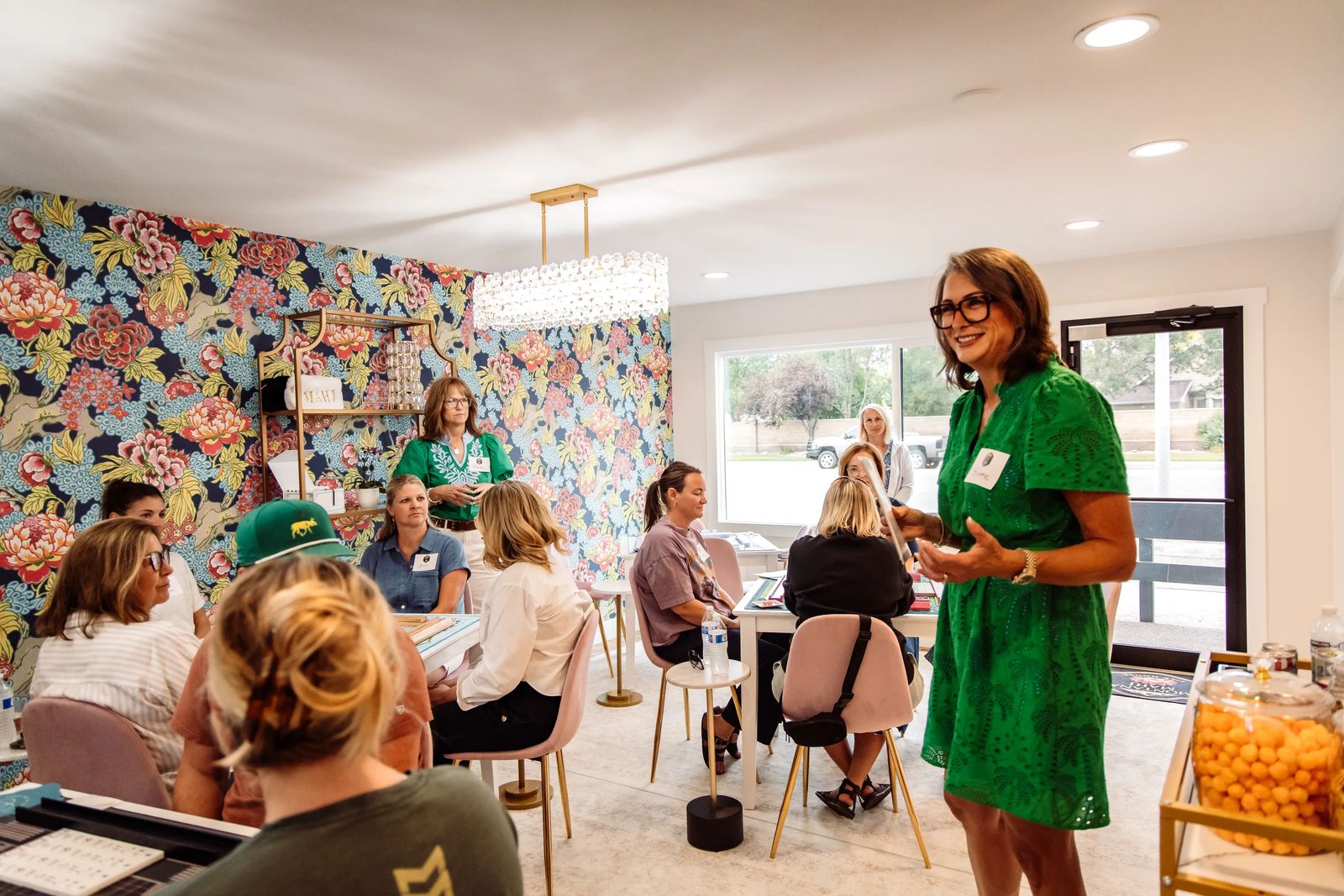
What is happening in Billings today didn't begin with a business plan. It began with a teacher. Through Mahjong with Ashley, Chambers has quietly introduced dozens of Billings residents to American Mahjong, removing the intimidation many first-time players feel and replacing it with curiosity, laughter, and confidence. Her lessons became more than instruction. They became invitations. Brooke and Randi are quick to acknowledge that without Ashley, there would likely be no Montana Mahj.
What happened next surprised everyone involved. Sunday afternoons around the Mahjong table became routine. Then Wednesday evenings. Friends invited neighbors. Neighbors brought coworkers. The circle slowly widened until Brooke realized she wasn't simply learning a new game. She had stumbled into something she hadn't realized she had been missing.
"What at first was a little bit of interest turned into an obsession," she says with a laugh. The obsession, though, wasn't really about Mahjong. It was about what happened because of Mahjong. Randi felt it too. "The reason I kept playing wasn't because I wanted to win," she says. "It was because I was enjoying meeting people again or reconnecting and having something other than the day-to-day. We put our phones down and just enjoy the company."
Somewhere between the first lesson and the dozens that followed, Brooke and Randi stopped thinking about Mahjong as simply a pastime. They began thinking about what it represented. They weren't just watching people learn a game. They were watching friendships form, confidence grow, and strangers slowly become regulars.
"We're trying to build something that we were missing," Randi says. That sentence, more than any business plan, became the beginning of Montana Mahj.
A Game That Has Always Been About People
As Brooke's curiosity grew, so did her appreciation for the game's history, which has never really been about winning. (See sidebar: The Roots of Mahjong.)
"I think the common root of it is the connection that it creates," Randi says.
Brooke wanted Montana Mahj to honor those roots rather than just its recent popularity. While the studio will primarily teach American Mahjong, she hopes to eventually introduce Chinese Mahjong as well.
"I am concerned about appropriation," she says. "I do want to honor the roots of this game."
Building the Kind of Place We Need
Ask Brooke and Randi what they're opening, and they'll tell you it isn't really a game studio.
"It's really the friendships and the community that we're trying to build around it that's important to me," Randi says.
That philosophy shapes every part of Montana Mahj. Yes, there will be beginner lessons, guided play, tournaments, memberships, and private events, but those are simply ways of creating opportunities for people to return to the table. Brooke envisions mornings with coffee, afternoons filled with easy conversation, and evenings where complete beginners sit beside experienced players who are eager to encourage rather than intimidate. The goal isn't to create experts overnight. It's to create a place where people feel comfortable walking through the door, whether they know the rules or not.
"This is really intended to be a community center where people feel comfortable going and playing," Brooke says.
For Randi, one of the most rewarding parts of the journey has been discovering what Mahjong gives back. As a physician assistant, she appreciates the growing body of research connecting mentally stimulating games with long-term cognitive health, but when she talks about what the game has meant personally, she doesn't mention strategy or brain function. Instead, she talks about restoration.
"It's a place where I can go and turn off my clinical mind," she says.
That sentiment seems to resonate across generations. Brooke has been surprised by how many young professionals, couples, and parents have expressed interest in learning. They're looking for something that doesn't revolve around a screen or another night out at the bar. They're looking for experiences that invite participation instead of observation and conversation instead of distraction.
"People are ready to put down their phones and their emails and engage," Brooke says.
Near the end of our conversation, Randi reflected on childhood memories of waiting impatiently until she was finally old enough to join the adults around the family card table. She remembers wanting to be included, not because of the game itself, but because of what the table represented.
"I kind of want this to be that," she says.
Maybe that's the real story unfolding in Billings. Yes, one of the world's oldest games is experiencing a resurgence. Yes, Montana Mahj will soon become the first dedicated Mahjong studio in the state. But those milestones feel secondary to what Brooke and Randi are really building. They're creating another place where community has room to grow.
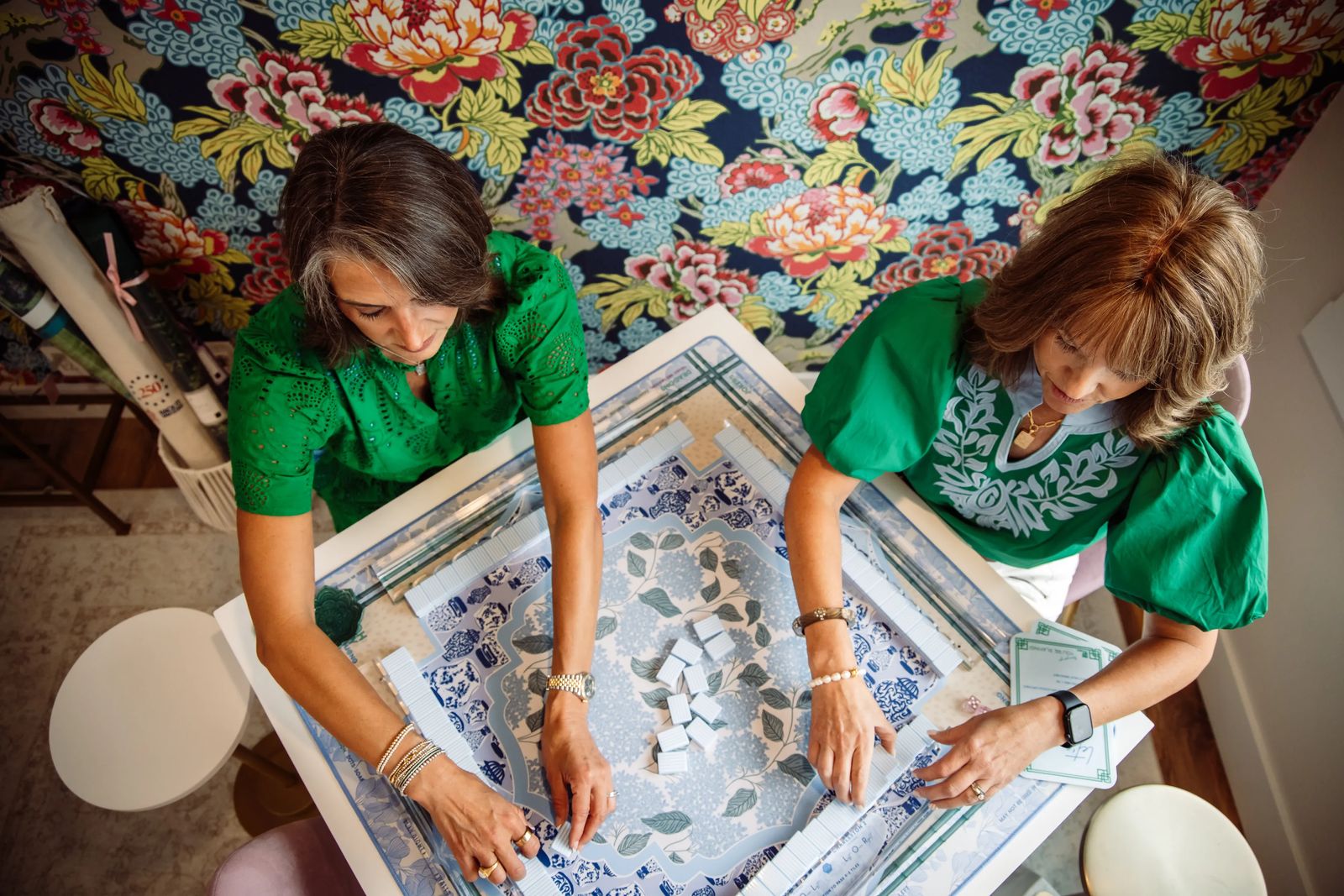
Months after Brooke walked into that quiet house, she found herself sitting around another table. This one sounded different. Tiles clicked softly against wood. Someone laughed. Coffee steamed nearby. Friends leaned in over colorful racks, studying their next move. Nobody reached for a phone.
The house hadn't changed. She had. Maybe that's what Mahjong has offered people for nearly two centuries, whether in a Chinese teahouse, a New York neighborhood card club, or now, in Billings. Not simply another game to learn, but another season of life to step into. And somewhere around the table, there's always room for one more chair.
To learn more visit Montanamahj.com
The Roots of Mahjong
Mahjong originated in China in the mid-1800s, evolving from earlier card games before spreading into homes and teahouses across the country. Chinese families passed the game down through generations.
When Mahjong reached the United States in the 1920s, it became a national sensation, then found a lasting home in Jewish communities, where weekly Mahjong groups became long-standing traditions. Those tables marked weddings, welcomed new babies, supported women through illness and loss, and raised money for charitable causes.
The rules changed. The players changed. The purpose behind the table did not.
Originally printed in the September 2026 issue of Simply Local Magazine
Never miss an issue, check out SLM's digital editions here!


