
Rethinking Depression Care in Billings
September 2026
Article by Maria Weidich
Photos by Sidney Emond
For many people living with depression, asking for help is one of the hardest steps they will ever take. When medication, therapy, and carefully adjusted treatment plans still do not bring relief, it is easy to wonder whether feeling better is even possible.
Psychiatric Nurse Practitioner Susan Finn wants people to know that isn't the end of the road. As owner of Holistic Healing Therapy in Billings, Susan treats patients with major depressive disorder, anxiety, bipolar disorder, ADHD and PTSD, taking a trauma-informed approach that focuses on the whole person, not just a diagnosis. When her patients aren't responding to conventional treatments, her message isn't to try harder, but to try something different.
Before opening her practice, Susan spent more than 30 years as a critical care nurse in emergency departments and trauma centers. "I loved it," she says. "But I also love to learn all the time, and I was trying to decide what to do next." That curiosity led her to a Doctorate of Nursing Practice, deepening her clinical expertise.
More Than Sadness
Before discussing treatment, Susan believes it's important to understand what major depressive disorder is, and isn't. "Sadness is a very normal reaction," she explains. "But it gets concerning when it starts to affect many parts of your life." Unlike temporary sadness, major depressive disorder is a medical condition that affects how a person thinks, feels, and functions. It can bring persistent hopelessness, loss of interest in activities once enjoyed, changes in sleep or appetite, trouble concentrating and feelings of worthlessness. For some, it may include recurrent thoughts of death or suicide.
When someone can no longer get out of bed, keep up with work, maintain relationships or enjoy the things they once loved, something more serious may be at play. "We see this all the time, and that's when we know this is more than sadness."
Healing Beyond the Symptoms
Finding the right treatment starts with the right diagnosis, which starts with asking the right questions, which is why Susan schedules 90-minute appointments. "I spend a lot of time because there might be an underlying diagnosis that no one has really recognized yet."
Conditions like bipolar disorder, ADHD, unresolved trauma, and underlying medical issues can mimic depression, so identifying the root cause helps ensure the right treatment. When trauma is part of the picture, Susan incorporates therapies like accelerated resolution therapy (ART), which uses guided eye movements to help process distressing memories, or brainspotting, which helps clients work through difficult emotions. She admits these approaches can sound a little "woo woo," but she has seen real breakthroughs as patients process experiences that weighed on them for years.
When Traditional Treatments Aren't Enough
For many of Susan's patients, this isn't the first time they've sought help, after years of trying different medications and treatments without lasting relief. When depression persists despite at least two antidepressant trials at appropriate doses and durations, it may be classified as treatment-resistant depression (TRD).
That diagnosis isn't the end of the conversation, Susan says. "There are so many therapies out there, and I don't think people know about these alternatives."
Stimulating Change
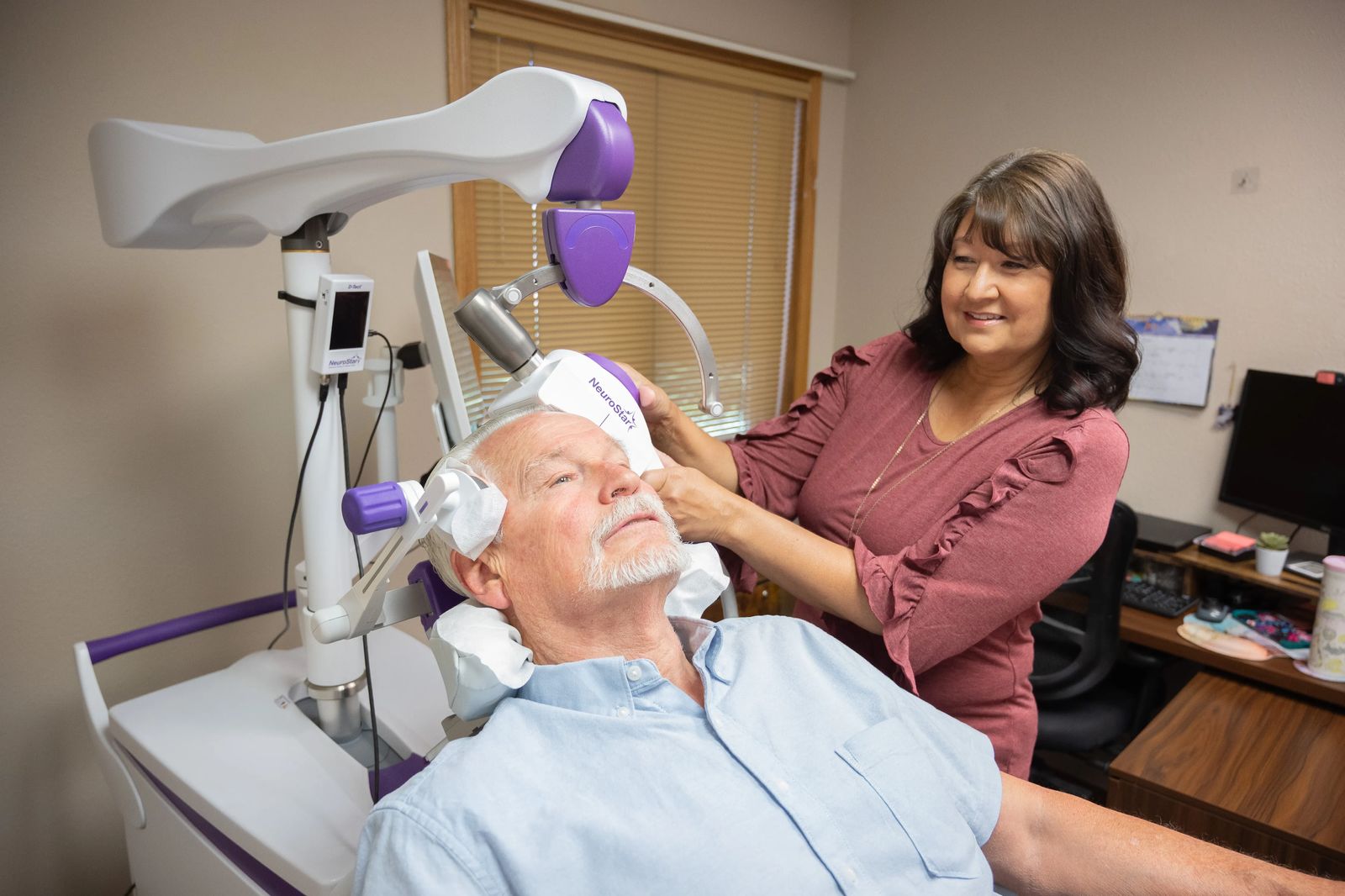
One alternative offered at Holistic Healing Therapy, still uncommon in Montana, is Transcranial Magnetic Stimulation, or TMS, an FDA-approved, non-invasive treatment for adults with treatment-resistant depression who haven't found relief through therapy or medication. Being one of the few providers in the state to offer it means giving patients another reason to hope when they feel they've run out of options.
Susan puts the science simply. "The thought is that one area of the brain involved in depression is underactive," she says. "What we're doing is stimulating that area with a magnet."
During each session, patients sit while a small magnetic coil rests against the side of the head. The treatment requires no surgery, anesthesia, or sedation, and unlike electroconvulsive therapy, it does not affect alertness or memory. Patients typically undergo a series of 36 sessions, five days a week, each lasting about 20 minutes.
Cleared by the FDA in 2008, TMS remains hard to access in rural areas, including much of Montana, so having it available in Billings means patients may not have to travel hundreds of miles for another option.
TMS isn't a cure-all, Susan notes, and isn't meant to replace therapy. She pairs it with medication and behavioral therapy for lasting progress, and while every patient's experience differs, some notice improvements in mood and motivation within the first few weeks.
Susan tracks progress with the Patient Health Questionnaire, a standardized tool that measures mood, sleep, appetite, and energy. According to NeuroStar's clinical data, more than 80% of patients who complete TMS see measurable improvement, and more than 60% achieve remission, meaning their symptoms improve enough that they no longer meet the criteria for depression.
Another Reason to Hope
TMS isn't the only option at Holistic Healing Therapy. For some patients, ketamine-assisted Spravato, an FDA-approved nasal spray for treatment-resistant depression, may help. Unlike traditional antidepressants, which can take weeks to work, Spravato targets a different pathway in the brain and can bring relief faster.
Because Spravato can temporarily affect blood pressure and alertness, patients self-administer the spray under Susan's supervision, then relax in a comfortable treatment room for two hours while she and her team monitor their response. Clinical studies show that, paired with an oral antidepressant, Spravato can significantly reduce depressive symptoms in adults with treatment-resistant depression and rapidly ease suicidal thoughts in some patients experiencing a mental health crisis.
Every day, Susan watches patients who once struggled to get out of bed reconnect with loved ones and rediscover hobbies they had let go. "I can look back on a patient's chart and now see a completely different person," she says. "That's what gets me up in the morning."
As with TMS, she encourages patients to pair Spravato with therapy and healthy lifestyle changes that support long-term recovery.
Perhaps the biggest takeaway isn't the technology itself. It's the reminder that mental health care continues to evolve, and there is no single approach that works for everyone. Sometimes recovery begins with the right diagnosis. Sometimes it's finding the right therapist. Sometimes it's a treatment that wasn't available just a few years ago.
Susan hopes people will remember one thing: if the first treatment doesn't work, or even the second, hope is not lost. "It doesn't mean the person has failed treatment," she says. "It means that we haven't found the right treatment yet."
You don't have to face a mental health crisis alone. If you or someone you know is struggling, help is available. Call or text 988 anytime to reach the Suicide & Crisis Lifeline. If someone is in immediate danger, call 911 or go to the nearest emergency department.
Originally printed in the September 2026 issue of Simply Local Magazine
Never miss an issue, check out SLM's digital editions here!


