
Let’s Talk About Perimenopause
May 2026
Article by Maria Weidich
Photos by Jamie Blotske
There was a time when menopause was something women endured silently and rarely discussed outside a close circle of friends, if at all. But as women start to ask more questions and providers reevaluate decades-old assumptions, that silence is beginning to lift. Inside the exam rooms at Billings OB/GYN Associates, this shift is unmistakable. Menopause may mark the end of one reproductive chapter, but it also signals the start of a more informed and empowered one.
At the heart of the conversation is Billings OB/GYN’s advanced practice provider team, which includes Nurse Practitioner Lindsay Cantwell and Physician Assistants Doreen Kenfield, Aimee Brown, Katie Steele, and Sarah Koppany. Together, they care for women at every stage of life and are helping more patients understand the often-misunderstood transition into perimenopause. As women experiencing different stages of this transition themselves, their perspective is both clinical and deeply personal.
The Science Behind the Symptoms
Menopause signifies the official end of a woman’s reproductive years, defined as going 12 consecutive months without a menstrual period. Perimenopause, however, is the gradual hormonal transition leading up to that point, often starting as early as the mid-30s and lasting from one to ten years.
Unfortunately, there’s not a simple blood test that indicates perimenopause, Doreen explains. “Hormones fluctuate significantly during this time, even week to week, so lab work can look different depending on when it's drawn,” she says. Even though high FSH levels are indicative of ovarian decline, Doreen clarifies, “periods trump everything.”
As ovarian function declines, estrogen and progesterone fluctuate unpredictably, and the body doesn’t always respond smoothly. “It’s like puberty in reverse,” Katie describes.
“But instead of a steady, cyclical pattern, you get dramatic fluctuations,” Lindsay adds. “It’s like riding a roller coaster,” she laughs. “Big highs and big lows.” Cycles can become irregular, sleep can unravel, and hot flashes, mood swings, joint pain, and brain fog often follow. In other words, it’s not a flip of a switch, but a slow and unpredictable transition.
The Diagnostic Gray Zone
One reason perimenopause is so difficult to pin down is that it’s wildly individual. No two women experience it the same way. “Everyone is different,” Aimee says. “It’s important to take each person individually, because there’s so much variability. Women have stressful lives as it is, and can be caught off guard by the symptoms they’re experiencing. We have to ask if these are symptoms of perimenopause or life in general.”
That overlap is what creates the gray zone. Mood changes, anxiety, mental fatigue, low libido, joint pain, the list goes on. While hormonal shifts are real and impactful, they are not always the sole explanation. Thyroid disorders, anemia, and mental health concerns can all mimic or worsen perimenopausal symptoms, Lindsay says. “Women often want to blame everything on hormones, but we always want to look at the whole person and the whole picture.”
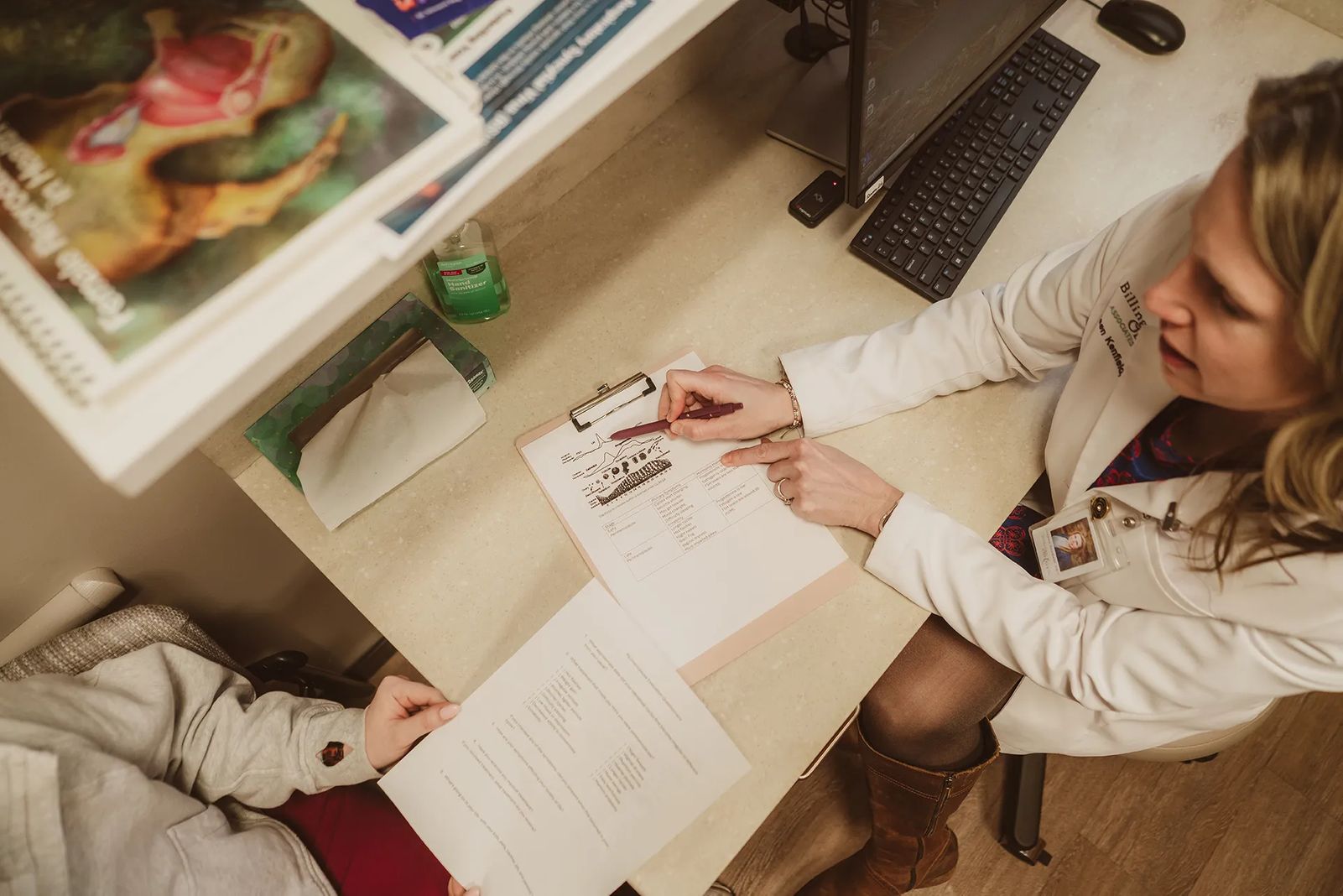
To better understand the bigger picture, the team at Billings OB/GYN has created a perimenopausal questionnaire to assess where a woman is in her life, including factors such as family stressors, job demands, and overall health.
“Sleep disruption is huge, and often overlooked,” Katie adds. “Poor sleep affects mood, metabolism, cardiovascular health, cognition, everything. You don’t have to wait until something feels drastic and terrible to come and see us; knowing what to expect and what’s coming can be very beneficial.”
“If symptoms are new and negatively affect your quality of life, it does not mean you have to suffer through them,” Aimee adds. “They are worth evaluating.”
Rethinking Hormone Therapy
For women whose symptoms are clearly linked to hormonal shifts, treatment options may include hormone replacement therapy (HRT) to replace the estrogen, progesterone, and testosterone the body makes less of as ovarian function declines. As the providers at Billings OB/GYN can attest, the conversation around HRT has changed dramatically over the past two decades.
Just how often are they asked if hormone therapy is safe? “All the time,” they echoed in unison. Much of that concern traces back to the 2002 publication of the Women’s Health Initiative, which suggested an increased risk of breast cancer and heart disease in women taking combined estrogen and synthetic progesterone. In the years that followed, alarming headlines reshaped how women and their providers approached hormone therapy.
What was largely lost in the news, the team explains, was context. The average woman in the study was 63, well past the typical onset of menopause, and the hormone formulations, dosages, and delivery methods differ from those commonly used today. While the study raised valid safety concerns, the abrupt halt and ensuing panic oversimplified the data.
“Historically, we just haven’t talked about it enough,” the team says. “Women are frustrated being told to just power through symptoms,” they say. “But the reality is there are ways we can help.”

Treatment Tailored for You
After symptoms, medical history, genetic risks, and lifestyle are all evaluated, modern HRT for women under 60 or within 10 years of menopause is considered safe for most and can significantly improve quality of life for those experiencing perimenopause symptoms.
Today’s options look different from those of decades ago. Estrogen can be delivered through skin patches or gels, which bypass the liver and may carry a lower risk of blood clots for some women. Oral progesterone is often added for women who still have a uterus to protect the uterine lining. Some patients choose a progesterone-releasing IUD combined with estrogen therapy, while others may benefit from localized vaginal estrogen to relieve discomfort. FDA-approved bioidentical hormones are also available.
As the team emphasizes, treatment decisions are highly individualized. “We use the lowest effective dose and regularly assess. It’s not a one-size-fits-all,” Aimee says.
For women who prefer to avoid hormones, non-hormonal prescription medications, including low-dose antidepressants or other therapies approved for hot flashes, can reduce symptoms. Lifestyle interventions may also help provide relief. Sleep hygiene, strength training, cardiovascular exercise, balanced nutrition, weight management, and limiting alcohol consumption can all make a meaningful difference. “We also collaborate with primary care providers, physical therapists, and naturopaths,” Lindsay adds. “Coordinated care matters."
More Than a Prescription
For most women, perimenopause care will unfold over time, not solved in a single appointment. The providers at Billings OB/GYN stress that meaningful care won’t come down to a quick treatment or one-time visit. “It’s not, here’s a prescription, goodbye,” the team says. “It’s ongoing support.”
That support begins with listening. “No question is off limits,” Lindsay says. “We’re just as frustrated as the patient because there is so much going on, but we really want to get to the root of it.”
“The whole point is to live our best life, and you need to find a provider that you can work with. On your first visit, we’re going to evaluate the whole picture and make sure nothing else is going on.”
Midlife, Reframed
Perimenopause doesn’t have to be framed as a decline. For many women, it can actually be an empowering stage of life, one that invites greater awareness and self-advocacy. The team at Billings OB/GYN encourages women to track and journal symptoms and speak up early.
Even if perimenopause is inevitable, confusion and isolation don’t have to be. “You’re still going to ride the waves, but it doesn’t have to be a dramatic roller coaster,” Lindsay assures. “You know your body more than anyone. If something feels off, it’s worth talking about. You don’t have to push through it alone.”
Originally printed in the May 2026 issue of Simply Local Magazine
Never miss an issue, check out SLM's digital editions here!


